
Messi Biology stated that pregabalin raw material is mostly in powder form, with poor flowability and high hygroscopicity. Direct compression or capsule filling is prone to issues such as large weight variations and uneven tablet content.
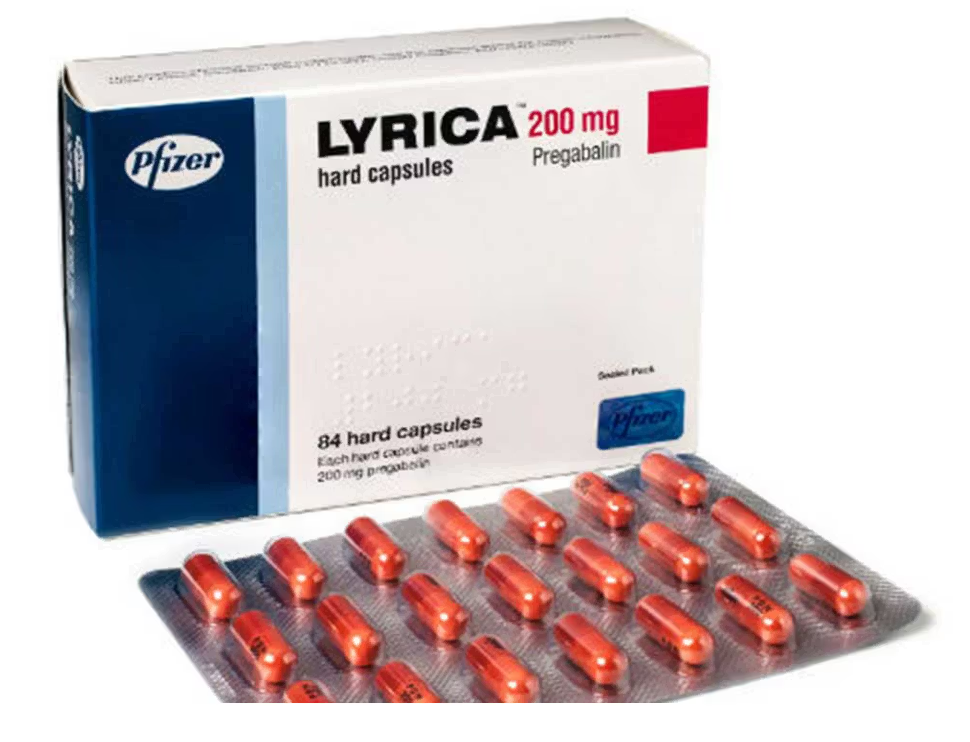
Magnesium oxide possesses excellent retention and anti-adhesive properties, which can significantly improve the flowability of the raw material powder, reduce interparticle friction and adhesion, and allow the material to evenly fill the die cavities. This ensures that tablet hardness, weight variation, and capsule filling weight meet pharmacopeial requirements, thereby improving production yield and batch-to-batch consistency.
Acting as a diluent and absorbent, magnesium oxide can stably carry the active pharmaceutical ingredient (API) of pregabalin, preventing drug agglomeration and ensuring that the active ingredient in each unit dose is precise and controllable. Its chemical properties are stable, and it does not undergo compatibility reactions with pregabalin. This reduces degradation risks such as raw material moisture absorption and oxidation, enhances the storage stability of the preparation, extends the shelf life of the drug, and ensures that the efficacy and purity do not decline after long-term storage.
During the in vivo release stage, magnesium oxide is weakly alkaline, which can mildly adjust the micro-environmental pH, promoting the rapid and uniform dissolution of pregabalin in the gastrointestinal tract. This avoids irritation caused by localized high concentrations while enhancing drug absorption efficiency, thereby ensuring onset speed and bioavailability.
For patients prone to gastrointestinal discomfort, the buffer system formed by magnesium oxide during preparation can also neutralize stomach acid and protect the mucous membrane after administration, achieving the dual goals of optimizing the formulation process and improving clinical tolerability.