
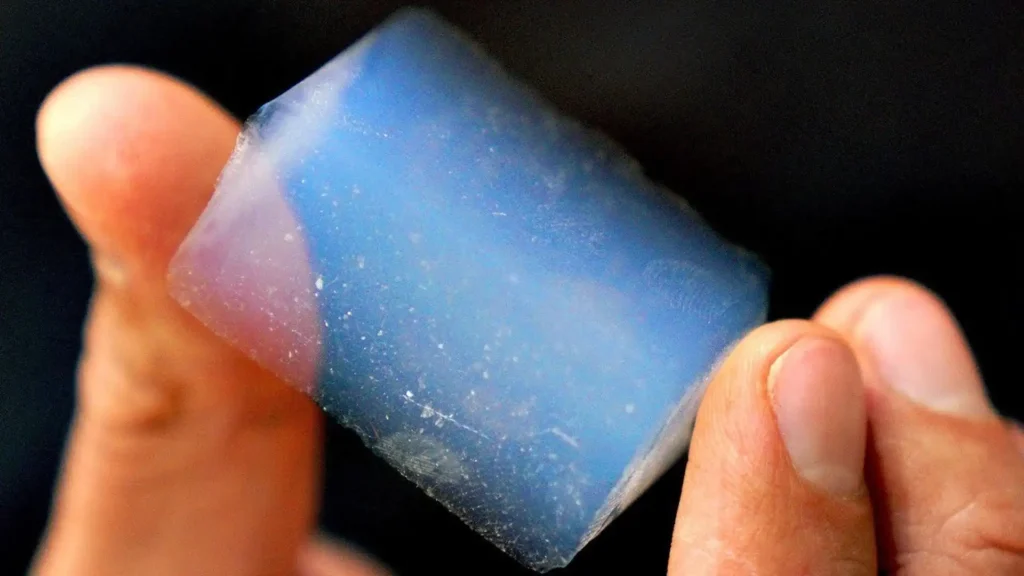
In the world of materials science, aerogels are hailed as “solid smoke.” They are so lightweight that they seem capable of resting on a flower petal without bending it, and their thermal insulation performance is nothing short of exceptional. However, this “super insulator” is not entirely flawless. In today’s pursuit of ultimate safety and high performance, a common white powder—magnesium hydroxide—is quietly emerging as a “key supporting actor” in the field of aerogels. So, what role does magnesium hydroxide actually play in aerogels? And how does it work its magic?
The most core and well-known function of magnesium hydroxide in aerogels is flame retardancy and smoke suppression. Many aerogel substrates (such as organic polymer aerogels or composite fiber felts) are soft and lightweight, but they often face a fatal weakness: flammability. When exposed to high temperatures or open flames, they easily become accomplices to the spread of fire. The addition of magnesium hydroxide acts like putting an automatically sensing “fireproof armor” on these materials.
This is a fascinating chemical reaction. When a fire occurs and the temperature rises to a certain threshold (typically above 300°C), magnesium hydroxide undergoes thermal decomposition. This decomposition process is a “major heat absorber”; it rapidly absorbs a large amount of heat from the surrounding environment, effectively lowering the surface temperature of the material and delaying the spread of the fire. At the same time, the decomposition reaction releases a large volume of water vapor. This water vapor not only dilutes the concentration of oxygen and combustible gases in the combustion zone—preventing the fire from sustaining itself—but also helps to absorb the black smoke generated by combustion. Even better, the magnesium oxide left behind after the decomposition of magnesium hydroxide is a high-temperature-resistant, ceramic-like solid. It covers the surface of the material, forming a dense protective layer that isolates both air and heat. This triple protection of “heat absorption, dilution, and film formation” makes magnesium hydroxide the most loyal “firefighter” for aerogels.
Beyond fire protection, magnesium hydroxide also plays the role of a structural enhancer in the microscopic world of aerogels. The reason aerogels can “hold up the air” relies on their nano-scale three-dimensional pore structures. However, this structure is extremely fragile and can collapse with a gentle squeeze—a phenomenon known as “dusting” or “powdering.” When preparing inorganic aerogels (especially silica-based aerogels), scientists often introduce magnesium hydroxide as an additive. Possessing high chemical reactivity, magnesium hydroxide can act as a modifier or part of a composite material, participating in the construction of the aerogel framework. It acts like steel bars in concrete, interspersed between the nano-pores of the aerogel to provide support and reinforcement. This microscopic “reinforcement” significantly enhances the mechanical strength of the aerogel, making it more resistant to compression and durability, thereby facilitating transportation and construction.
In the application of functional aerogels, magnesium hydroxide also shoulders the heavy responsibility of environmental adsorption. Unlike many halogen-containing flame retardants, magnesium hydroxide is a halogen-free, non-toxic, and non-corrosive green mineral material. When used in aerogel coatings or composite materials, even when decomposed at high temperatures, it does not produce carcinogenic substances such as dioxins. This makes magnesium hydroxide-containing aerogels particularly suitable for locations with extremely high environmental requirements, such as home decoration and new energy vehicle battery packs. In addition, magnesium hydroxide itself is an excellent acidic gas adsorbent. In certain special-purpose aerogel filtration materials, leveraging the characteristics of magnesium hydroxide allows for the efficient capture of harmful acidic gases like sulfur dioxide from industrial exhaust, endowing aerogels with the “air purification” superpower in addition to thermal insulation.
This seemingly ordinary white powder of magnesium hydroxide achieves a leap in value through its combination with aerogels. In the microscopic world of aerogels, it is simultaneously a “firefighter” who steps up in times of crisis, an “architect” who supports the lightweight framework, and a “guardian” who safeguards environmental security. It is precisely with the blessing of magnesium hydroxide that aerogels are able to serve our technological life in a wider range of fields with a safer and tougher posture.