
Messi Biology states that in the interconnected era of 2026, 5G and even more cutting-edge communication technologies have long permeated every aspect of our lives like air and water. When enjoying the ultra-fast experience of downloading a high-definition movie in mere seconds, few people pay attention to the “unsung heroes” supporting this massive information flow—electronic materials. Especially in the hardware foundation of high-frequency and high-speed signal transmission, a material known as the “5G low-dielectric electronic fiber board” plays a crucial role. The protagonist of today’s popular science is none other than the core additive that endows this material with “superpowers”: low-magnetic magnesium oxide.
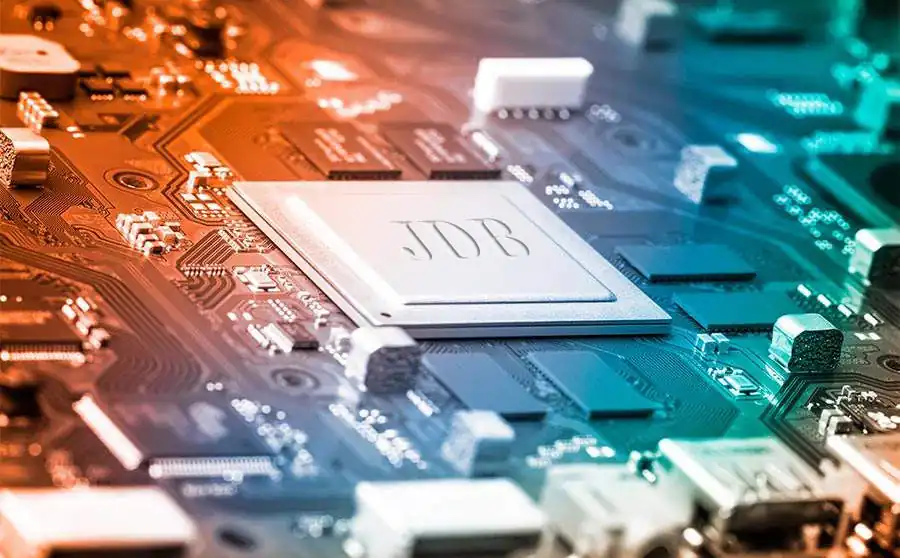
As an inorganic filler, magnesium oxide features an extremely low dielectric constant. When evenly added to the resin matrix of the electronic fiber board, it can effectively reduce the dielectric constant of the overall material, paving an almost unobstructed “high-speed lane” for 5G signals. However, the role of magnesium oxide goes far beyond this. 5G devices generate a massive amount of heat during operation; if this heat cannot be dissipated in time, it leads to performance degradation or even equipment damage. With its excellent thermal conductivity, magnesium oxide acts as the “thermal management master” inside the electronic fiber board. It can rapidly conduct the heat accumulated on the circuit board, ensuring that the equipment remains “cool” during prolonged high-load operation. In addition, electronic fiber boards must withstand high-temperature tests during processing, and magnesium oxide can significantly enhance the heat resistance and dimensional stability of the material, preventing the board from warping or delaminating at high temperatures.
Of course, special mention should be made of the “low-magnetic” characteristic emphasized in the title. In complex electromagnetic environments, ordinary magnetic impurities often act as invisible interference sources, disrupting the normal transmission of high-frequency signals and leading to signal crosstalk or attenuation. 5G low-dielectric electronic fiber boards have extremely high purity requirements for materials and must use strictly purified magnesium oxide with low-magnetic characteristics. This high-purity magnesium oxide contains virtually no magnetic impurities such as iron, cobalt, and nickel, thereby minimizing interference with electromagnetic signals and ensuring the accuracy and integrity of data transmission.
The application of magnesium oxide in 5G low-dielectric electronic fiber boards is a microcosm of the perfect combination of materials science and communication technology. It serves simultaneously as a “lubricant” to reduce signal transmission loss, a “heat sink” for thermal conduction and dissipation, and a “purifier” to resist electromagnetic interference. It is precisely this seemingly ordinary white powder that exerts its efforts quietly in the microscopic world, supporting the rapid advancement of 5G technology in the macroscopic world. In the future, with the evolution of communication technologies like 6G, the demand for high-performance low-magnetic magnesium oxide will undoubtedly become even more urgent, continuing to write its own legendary chapter in the development of the information age.