
According to Messi Biology, as an eco-friendly inorganic powder material, magnesium carbonate has become a preferred functional additive for the insulation and sheath layers of high- and low-voltage cables and flame-retardant cables, and is widely used in various wire and cable products due to its four major properties: acid-base neutralization, high-efficiency flame retardancy, reinforcement and toughening, and insulation stability.
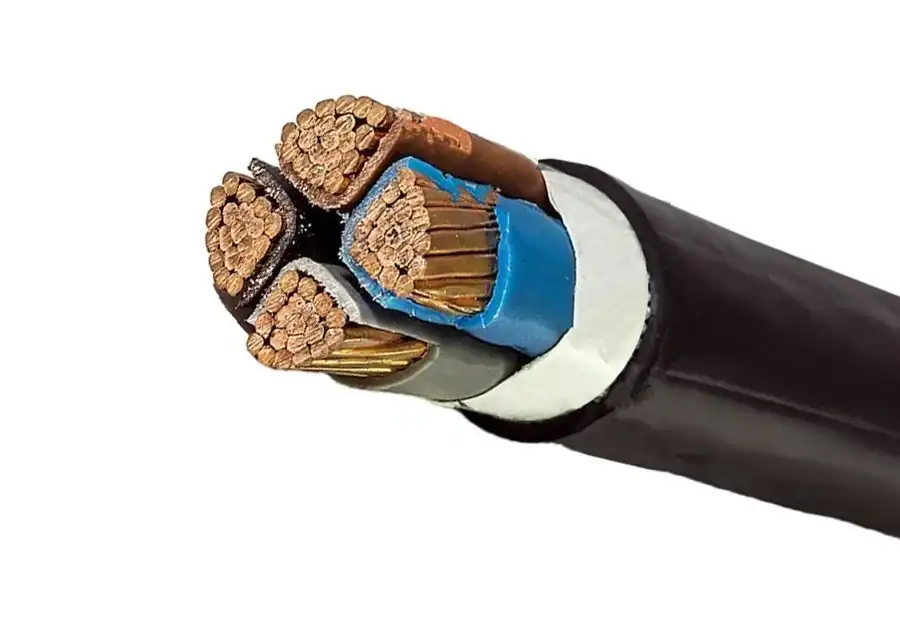
Magnesium carbonate is weakly alkaline and possesses excellent acid-base neutralization capacity. It can effectively neutralize acidic substances generated within the cable polymer matrix, suppress acid corrosion, and protect the insulation layer and conductors from damage. At the same time, it reduces the migration of acidic ions, prevents safety hazards such as current leakage and short circuits, and fundamentally enhances the anti-aging capability and operational stability of cables.
When a cable is exposed to high temperatures or open flames reaching around 350°C, magnesium carbonate undergoes a decomposition reaction, absorbing a large amount of heat, rapidly reducing the surface temperature of the material, and delaying the combustion process. The carbon dioxide generated by decomposition is an inert gas that can dilute oxygen and combustible gases, cutting off the oxygen supply required for combustion. Meanwhile, the magnesium oxide produced by the reaction forms a dense inorganic protective film on the cable surface, isolating heat and flames from inward penetration and preventing fire from spreading along the cable. Compared with traditional halogen-containing flame retardants, magnesium carbonate produces almost no toxic smoke during combustion, offering higher safety and fully complying with environmental and flame-retardant standards for wires and cables.
Magnesium carbonate exhibits good dispersibility and can be uniformly filled into cable matrixes such as PVC, PE, and XLPE to improve the tensile strength, toughness, and wear resistance of the material, preventing cracking and damage during cable laying and bending. Additionally, magnesium carbonate itself has excellent insulation properties, which can fill micro-gaps in the matrix, strengthen the overall insulation effect of the cable, and ensure stable power transmission.