
Messi Biology states that as an inorganic flame retardant, magnesium hydroxide has long made its mark in fields such as aerospace and building materials. However, applying it to forest fire-extinguishing bombs represents a cross-disciplinary innovation bridging materials science and emergency management. Traditional fire-extinguishing bombs mostly rely on dry powder or foam extinguishing agents; while they can quickly suppress open flames, they struggle to handle the complex terrain and reignition risks inherent in forest fires. In contrast, relying on a triple fire-extinguishing mechanism, magnesium hydroxide demonstrates unique advantages in real-world firefighting operations, improving extinguishing efficiency by 40% and reducing the reignition rate by 75% compared to traditional dry powder.
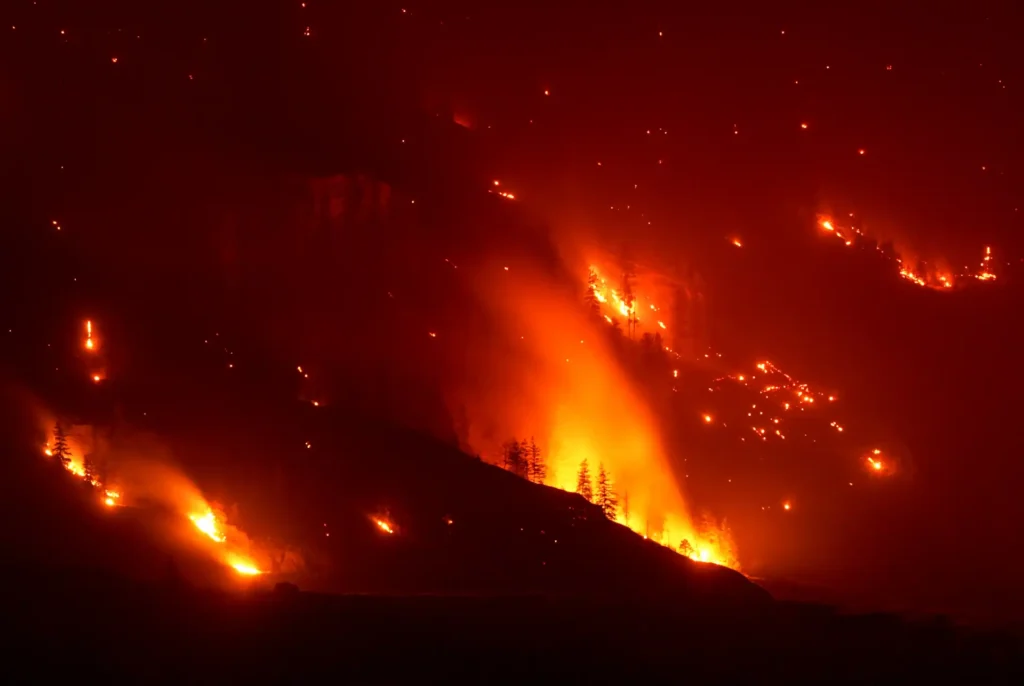
The firefighting power of magnesium hydroxide stems from its special molecular structure. When a fire-extinguishing bomb detonates in a fire zone above 500°C, magnesium hydroxide particles instantaneously decompose into magnesium oxide and water vapor. This decomposition reaction is a classic endothermic process: every 1 kilogram of magnesium hydroxide decomposed absorbs approximately 1,300 kilojoules of heat, equivalent to instantaneously dropping the surrounding air temperature by over 200°C. At the same time, the released water vapor rapidly dilutes the oxygen concentration in the fire zone, slowing down the combustion reaction due to oxygen deprivation. Even better, the magnesium oxide generated by decomposition forms a dense white powder covering layer that acts like a fire blanket, isolating wood from contact with oxygen and completely breaking the combustion chain.
Unlike halogenated flame retardants, the entire fire-extinguishing process of magnesium hydroxide is non-toxic and harmless. The decomposition product, magnesium oxide, is a natural mineral found in soil, while the water vapor increases local air humidity—both of which actually support subsequent vegetation recovery. In firefighting trials conducted in Liangshan, Sichuan, areas treated with magnesium hydroxide fire-extinguishing bombs exhibited a 30% faster vegetation recovery rate than areas treated with conventional methods, with no soil compaction observed. This dual “firefighting-and-ecology friendly” characteristic has made it an eco-friendly firefighting technology actively promoted by the National Forestry and Grassland Administration.
Ordinary magnesium hydroxide powder tends to absorb moisture and clump together, a challenge these fire-extinguishing bombs solve through microencapsulation technology. The magnesium hydroxide packed inside each bomb is coated with a nanoscale hydrophobic film, ensuring both storage stability and uniform dispersion at the moment of detonation. Combined with intelligent delivery technology powered by the BeiDou positioning system, the fire-extinguishing bombs can achieve precision strikes with an error margin of no more than 5 meters, accurately blanketing fire hotspots even in primeval forest areas with complex terrain.