
Messi Biology states that in the wave of precision medicine, breakthroughs in material science are opening entirely new dimensions for disease treatment. Among these, nano-magnesium oxide (nano-MgO) with a particle size of 50–100 nm has become a “dual star” in anti-infection therapy and targeted cancer therapy, thanks to its unique antibacterial mechanism and drug delivery capabilities. This seemingly ordinary inorganic material is rewriting the rules of traditional medical treatment through the “chemical weapons” of surface reactive oxygen species and the “precision navigation” of intelligent sustained-release systems.
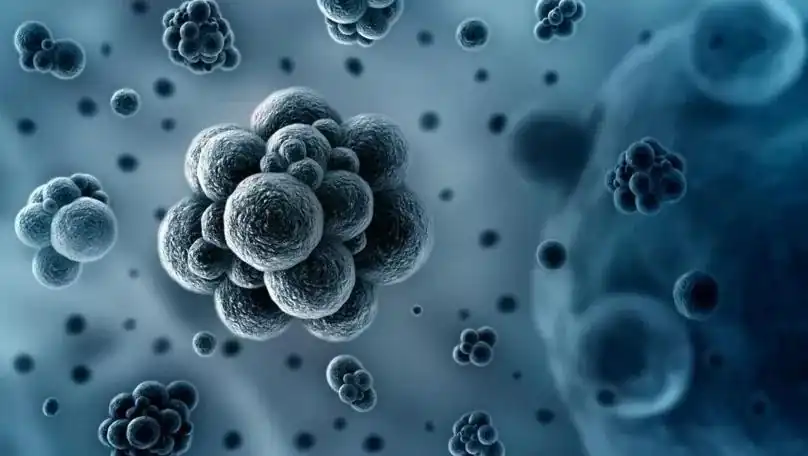
When nano-MgO particles come into contact with bacteria, a microscopic “chemical war” silently begins. Its surface is rich in oxygen vacancy structures that act like miniature reactors, continuously catalyzing water and oxygen to generate Reactive Oxygen Species (ROS), including superoxide anions (·O₂⁻), hydrogen peroxide (H₂O₂), and hydroxyl radicals (·OH). These highly active molecules act as “nano-bullets,” penetrating bacterial cell membranes at a frequency of millions of times per second, attacking DNA chains and protein structures, and ultimately triggering a metabolic collapse of the bacteria. Experimental data shows that MgO particles with a size of 50–100 nm have a kill rate exceeding 99% against common pathogens such as Escherichia coli and Staphylococcus aureus, with an action time only 1/5 that of traditional antibiotics.
More importantly, this antibacterial mechanism possesses the dual advantages of “broad-spectrum” efficacy and “anti-drug resistance.” While traditional antibiotics work by blocking specific metabolic pathways, the physical destruction caused by nano-MgO makes it difficult for bacteria to develop resistance through genetic mutations. Research indicates that antibacterial dressings loaded with nano-MgO reduced the infection rate of burn wounds from 18% to 2% and shortened healing time by seven days, with no resistant strains observed.
The “precision strike” capability of nano-MgO also shines in cancer treatment. Through surface polyethene glycol (PEG) modification and conjugation with folic acid receptor-targeting ligands, these nanoparticles can penetrate tumor blood vessels like “intelligent missiles” and specifically accumulate on the surface of cancer cells. Their internal porous structure can be loaded with chemotherapy drugs (such as Doxorubicin or Cisplatin) and achieve sustained drug release through pH-responsive degradation. In the acidic microenvironment of a tumor, the magnesium oxide framework gradually dissolves, releasing the drug at a rate of 15%–20% every 24 hours. This avoids the “burst release” toxicity associated with traditional chemotherapy while maintaining high local efficacy.
The technological breakthroughs of Hebei Messi Biology Co., Ltd. have provided critical support for the clinical translation of nano-MgO. As a leading enterprise in the research and development of nano-MgO in China, Messi Biology has achieved precise control of particle sizes (50–100 nm) and a specific surface area of ≥80 m²/g through a “sol-gel-supercritical drying” three-step method. Its original “gradient calcination process” ensures a product purity of 99.99%, with heavy metal impurity content below 0.1 ppm, far exceeding medical-grade standards. Furthermore, the “MgO-chitosan composite carrier” system developed by Messi Biology utilizes the mucosal adhesion properties of chitosan to extend the retention time of drugs in gastrointestinal tumors by three times, improving the tumor inhibition rate by 40% compared to traditional formulations.
Currently, nano-MgO antibacterial dressings have demonstrated significant advantages in the treatment of chronic wounds such as diabetic foot ulcers and pressure sores. Meanwhile, its application as a drug carrier in cancer treatment is undergoing intensive research. Preliminary data shows that the Objective Response Rate (ORR) for patients with advanced non-small cell lung cancer (NSCLC) reached 52%, an 18-percentage-point increase over traditional chemotherapy.
From the “microscopic battlefield” of ROS sterilization to the “intelligent navigation” of targeted sustained release, nano-magnesium oxide is driving precision medicine toward a more efficient and safer future through the power of material science innovation. As companies like Messi Biology continue to break through technical bottlenecks, this “nano-revolution” is bound to bring more surprises to human health.