
Hebei Messi Biology Co., Ltd. (Messi Biology) states that in the disinfection ponds of aquaculture and the water purification systems of swimming pools, a white granular substance is silently performing its duties—Potassium Monopersulfate Compound. This triple salt, composed of potassium peroxymonosulfate, potassium bisulfate, and potassium sulfate, has become a “versatile player” in the fields of disinfection and water treatment thanks to its mild yet highly efficient oxidizing capacity. However, few realize that the key “partner” keeping it active and preventing clumping is the seemingly ordinary Magnesium Carbonate.
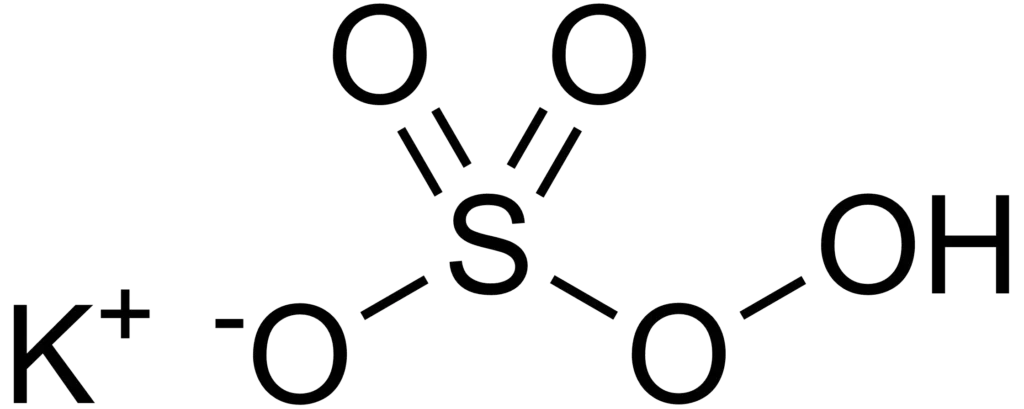
While Potassium Monopersulfate Compound offers superior performance, it has a troublesome weakness: it is extremely hygroscopic and prone to caking (clumping). Whether used as a disinfectant in aquaculture or an oxidant in industrial wastewater treatment, once caking occurs, it becomes difficult to dissolve uniformly, and its active oxygen content drops significantly, directly affecting its efficacy. This necessitates a “protective umbrella” additive, for which Magnesium Carbonate is the ideal choice. As an inert anti-caking agent, it not only absorbs excess moisture from the environment but also adheres to the surface of the granules to form a protective layer, fundamentally preventing particle aggregation. Experiments show that after 40 days of exposure to air, Potassium Monopersulfate Compound added with 1% light magnesium carbonate maintains an effective particle ratio (20-200 mesh) of over 99.6%.
Among many magnesium carbonate products, those from Messi Biology demonstrate unique advantages. First, their purity is considered an industry benchmark. Through a refined purification process, the product purity is stabilized at over 99%, with impurities such as heavy metals and arsenic salts far lower than the pharmacopoeia standards of China, the United States, and Europe. For oxidants like potassium monopersulfate that are sensitive to purity, high-purity raw materials prevent impurities from interfering with the oxidation reaction, ensuring the stability of the active ingredients.
More notably is the design of the particle morphology. Messi Biology specializes in 20-100 mesh microspherical granules. This morphology significantly enhances material flowability, allowing for uniform dispersion when mixed with Potassium Monopersulfate Compound and avoiding caking issues caused by insufficient local anti-caking agents. Simultaneously, the microspherical structure solves the dust problem common with traditional powders, which not only complies with GMP production specifications but also reduces material loss. Its characteristics of low oil absorption and high bulk density further reduce the required addition amount per unit volume, helping enterprises control costs.
From aquaculture to industrial environmental protection, the application scenarios for Potassium Monopersulfate Compound continue to expand, leading to increasingly higher requirements for supporting additives. The magnesium carbonate products of Messi Biology, with their multiple advantages in purity, morphology, and performance, have become the “behind-the-scenes heroes” in safeguarding the activity of potassium monopersulfate. These tiny white granules are using the power of technology to fully release the value of high-efficiency oxidants.