
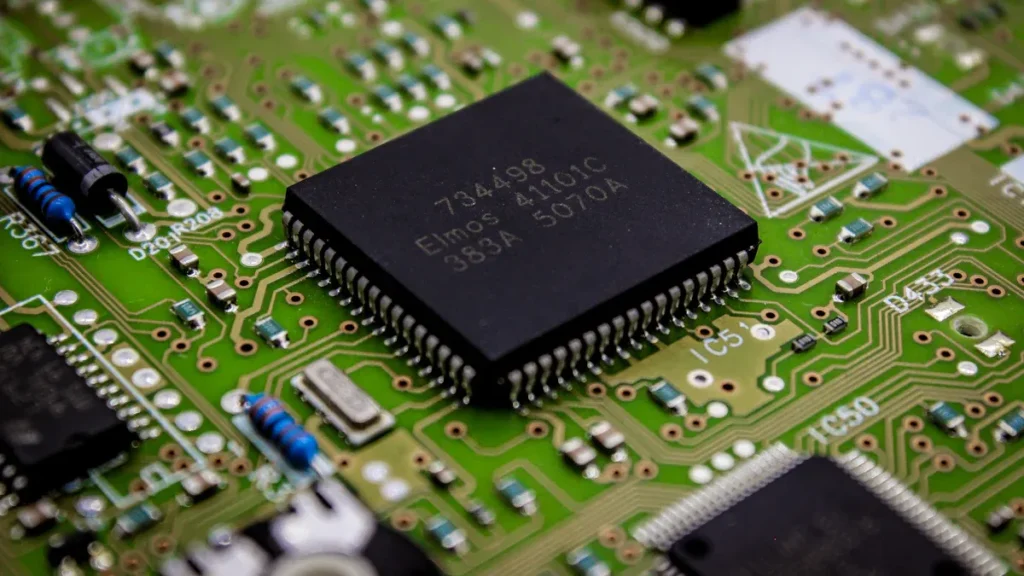
In the core components of electronic products such as mobile phones, computers, and new energy vehicles, Copper Clad Laminate (CCL) serves as the fundamental material for Printed Circuit Boards (PCBs), carrying the critical mission of circuit connectivity. Magnesium Hydroxide (Mg(OH)2), a seemingly ordinary inorganic compound, is acting as an “invisible guardian,” providing core support for the safety and performance upgrades of CCLs.
According to Messi Biology, the core value of magnesium hydroxide in CCLs stems from its unique flame-retardant mechanism. When temperatures rise above 340°C, it undergoes a decomposition reaction that not only absorbs a significant amount of heat to lower the material’s temperature but also releases water vapor to dilute combustible gases. Simultaneously, it generates high-temperature-resistant magnesium oxide (MgO), which forms a dense flame-retardant barrier, achieving triple protection through “cooling, dilution, and oxygen isolation.” This flame-retardant method does not rely on harmful substances such as halogens. Its decomposition products consist only of water and magnesium oxide, producing minimal smoke and zero toxicity. This perfectly aligns with the environmental requirements of the modern electronics industry, ensuring that CCLs are safer and more reliable in fire scenarios.
Beyond its eco-friendly flame-retardant advantages, magnesium hydroxide also maintains the key performance metrics of CCLs. It possesses excellent electrical insulation properties; its addition does not significantly impair the dielectric performance of the laminate. One experiment demonstrated that a CCL containing 10% magnesium hydroxide maintained a dielectric constant of only 5.33 and a volume resistivity as high as 1.62×10¹⁴Ω⋅m, fully meeting the requirements for electronic signal transmission. Furthermore, surface-modified magnesium hydroxide exhibits excellent compatibility with base materials like epoxy resin, enhancing mechanical properties such as flexural strength, which prevents deformation or cracking during processing and end-use.
In terms of application methods, magnesium hydroxide demonstrates flexible adaptability. It can be added directly into resin systems to produce flame-retardant CCLs, or its dispersibility can be optimized through surface modification, or it can be used in synergy with other flame retardants to enhance overall effectiveness. It has become a core raw material, particularly in the preparation of halogen-free and phosphorus-free CCLs. A specific technical patent explicitly utilizes magnesium hydroxide as the primary material for the flame-retardant layer, combined with thermal conductive and reinforcing layers, to create eco-friendly CCLs that balance safety, heat dissipation, and structural strength.
Although the industry once faced challenges such as high loading requirements and hygroscopicity (moisture absorption), these issues are being systematically resolved through technological advancement. By developing high-efficiency modified products, an excellent flame-retardant effect with a Limiting Oxygen Index (LOI) of 37.2 can now be achieved with a loading of only about 10%. Meanwhile, specialized surface treatment technologies have significantly improved its moisture resistance and compatibility. As an inorganic flame retardant with abundant raw material sources and low costs, magnesium hydroxide is driving the CCL industry toward a “safe, green, and high-performance” transformation, consolidating the foundation for the sustainable development of the electronics industry.