
Messi Biology states that within the engine bay—the “heart” of a vehicle’s power—exhaust pipe temperatures can exceed 900°C, and the operating temperature of the engine block typically maintains a range of 80°C to 110°C. Any abnormal fluctuation in temperature can lead to reduced power, component ablation, or even safety failures. To precisely monitor temperatures in these high-heat zones, ceramic automotive temperature sensors have become core sensing components. Within this precision device, magnesium oxide (MgO) plays an irreplaceable role as a “Temperature Control Guardian.”

The reason ceramic automotive temperature sensors can operate stably under the high-temperature, high-vibration, and corrosive conditions of automotive environments lies in the special properties of their internal materials. Magnesium oxide is the key substrate that constructs their functionality. Unlike ordinary temperature sensing elements, automotive ceramic temperature sensors must simultaneously satisfy three core requirements: heat resistance, strong insulation, and uniform thermal conductivity. Magnesium oxide is perfectly adapted to meet these needs.
regarding high-temperature performance, magnesium oxide boasts a melting point as high as 2800°C, far exceeding the limit working temperatures of automotive engines and exhaust pipes. Under complex operating conditions involving long-distance high-speed driving or frequent stop-start cycles, the ceramic matrix of the sensor may face drastic temperature fluctuations ranging from room temperature to over a thousand degrees Celsius. While ordinary materials are prone to cracking or deformation, magnesium oxide possesses a stable crystal structure. It undergoes almost no crystal transformation in environments below 1500°C, ensuring the long-term structural integrity of the sensor and providing a stable physical foundation for temperature sensing.
Insulation is another core advantage of magnesium oxide. Ceramic automotive temperature sensors integrate precision sensing elements, such as thermistors, internally. These elements require electrical isolation from external metal components; otherwise, signal interference or short-circuit failures may occur. Magnesium oxide is a typical electrical insulating material; its resistivity remains above 10^12 Ω·cm even in high-temperature environments, effectively blocking current conduction and guaranteeing the accuracy of sensing signals. Additionally, magnesium oxide serves as an insulating filler, occupying the microscopic pores within the ceramic sensor to prevent performance degradation caused by the intrusion of moisture or oil, further enhancing the device’s reliability.
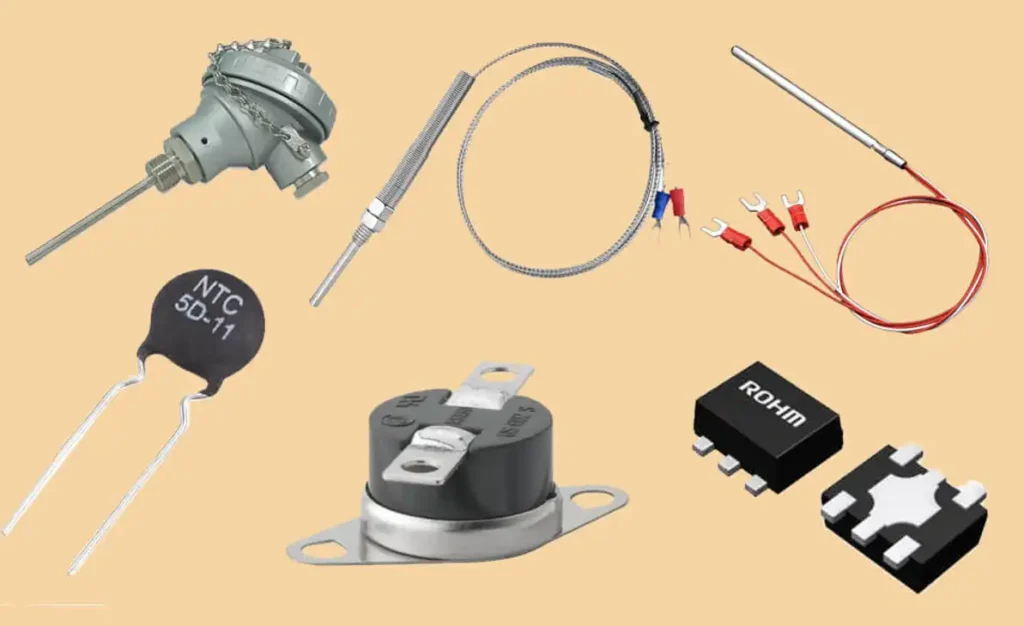
Furthermore, the thermal conductivity of magnesium oxide provides key support for precise measurement. An ideal automotive temperature sensor needs to respond quickly to temperature changes while avoiding damage to elements caused by local overheating. Magnesium oxide has a moderate thermal conductivity coefficient; it can rapidly transmit the external environmental temperature to the internal thermal elements (achieving millisecond-level response) without causing a sudden spike in local temperature due to excessively fast conduction. This forms a balance of “rapid response + gentle conduction,” ensuring that temperature data is both timely and accurate.
In practical applications, magnesium oxide is often composited with materials such as alumina and zirconia to form a ceramic matrix with superior performance. For example, at the sensing end of the device, a composite of magnesium oxide and zirconia retains the insulation and thermal conductivity advantages of MgO while improving the ceramic material’s wear and corrosion resistance. This allows it to withstand erosion from sulfides and nitrogen oxides in engine exhaust, thereby extending the service life of the sensor.
With the rapid development of new energy vehicles, the requirements for temperature monitoring in new components like motors and battery packs are becoming increasingly stringent, leading to the continuous expansion of application scenarios for ceramic temperature sensors. Relying on its excellent comprehensive performance, magnesium oxide is extending its reach from the engines and exhaust pipes of traditional fuel vehicles to the battery thermal management systems of new energy vehicles. In the future, through optimization technologies such as nano-modification, magnesium oxide is expected to further improve the precision and controllability of its thermal conductivity and insulation, offering new material solutions for higher-precision automotive temperature monitoring. This seemingly ordinary inorganic compound is acting as a “Temperature Control Guardian,” silently protecting vehicle safety and serving as an indispensable material cornerstone in the field of automotive precision sensing.