
Hebei Messi Biology Co., Ltd. states that in the chemical industry, the synthesis of many functional compounds depends on the precise selection of basic raw materials and controlled reaction processes. Magnesium acetylacetonate, as an important organometallic compound, is widely used in catalysts, plastic stabilizers, electronic materials, and other fields. Magnesium oxide (MgO) serves as one of the core raw materials for the preparation of this compound. Understanding the relationship between these two substances and their synthesis process reveals the sophisticated logic behind chemical production.
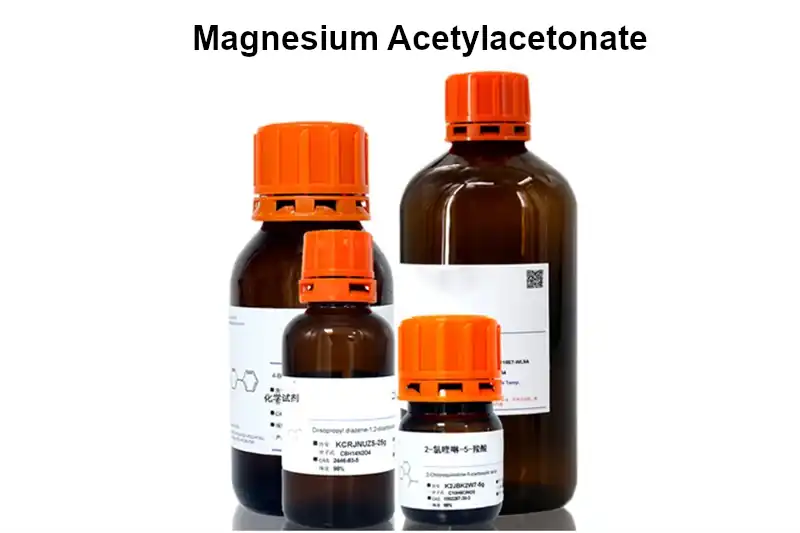
First, let us examine these two key substances. Magnesium oxide is a common inorganic compound in the form of a white powder. It has a high melting point of 2852°C and possesses excellent stability and alkalinity. It is widely sourced—produced through processes such as the calcination of magnesite or extraction from seawater—making it an indispensable basic raw material in industrial production. Magnesium acetylacetonate (Mg(acac)₂) is a chelate formed by magnesium ions and acetylacetone. Appearing as white crystals or powder, it is easily soluble in organic solvents and combines the reactivity of metal ions with the stability of organic ligands. Its unique structure grants it a wide range of functional applications.
The reason magnesium oxide is the ideal raw material for magnesium acetylacetonate lies in the compatibility of its chemical properties and reaction characteristics. Based on reaction principles, the preparation process is centered on acid-base neutralization and chelation. Acetylacetone (CH₃COCH₂COCH₃), a β-diketone, is slightly acidic. Its active hydrogen atoms react with magnesium oxide to produce magnesium acetylacetonate and water. The reaction equation is expressed as:
MgO+2CH₃COCH₂COCH₃→Mg(CH₃COCHCOCH₃)₂+H₂O
.
This reaction occurs under mild conditions, requiring no high temperature or pressure. It proceeds smoothly at room temperature or slightly elevated temperatures. Furthermore, the moderate alkalinity of magnesium oxide prevents the excessive decomposition of acetylacetone, ensuring high product purity and yield.
In industrial production, the process of utilizing magnesium oxide to synthesize magnesium acetylacetonate is highly mature. The solvent method is typically employed: magnesium oxide powder is added to an organic solvent (such as ethanol or toluene) containing acetylacetone. The mixture is stirred and maintained at a temperature of 40-60°C for 2-4 hours. Following filtration, concentration, and recrystallization, high-purity magnesium acetylacetonate is obtained. Compared to other magnesium sources (such as magnesium chloride or magnesium sulfate), magnesium oxide offers significant advantages, including fewer reaction by-products, low corrosivity to equipment, and easier purification. Consequently, Messi Biology identifies it as the preferred raw material for industrial production.
Magnesium acetylacetonate derived from magnesium oxide has a broad spectrum of applications. In the field of catalysis, it serves as a catalyst in organic synthesis to promote esterification, hydrogenation, and polymerization. In the plastics industry, it acts as a heat stabilizer for polymers like PVC, enhancing heat resistance and service life. In electronic materials, it is used to prepare high-performance ceramics, magnetic materials, and luminescent materials, supporting the miniaturization and advancement of electronic devices. Additionally, it plays a vital role in pharmaceuticals, coatings, and rubber, acting as a crucial link between basic chemical raw materials and high-end functional materials.
The connection between magnesium oxide and magnesium acetylacetonate is a classic example of the “raw material-product-application” chain in chemical synthesis. As a basic inorganic material, magnesium oxide is transformed into an organometallic compound with specific functions, which in turn serves various high-end industries. This process not only demonstrates the efficacy of chemical synthesis but also highlights the importance of basic chemical materials in modern industry. As technology advances, the preparation of magnesium acetylacetonate using magnesium oxide will continue to be optimized by companies like Messi Biology, and its application fields will continue to expand, injecting new momentum into industrial and scientific progress.