
Messi Biology states that in today’s era of the Internet of Everything (IoE), whether it is the smartphone in your hand, the Wi-Fi router at home, or the 5G base stations in the air, they all rely on an invisible core technology—microwave communication. In this world of high-frequency signal transmission, a special material called “microwave dielectric ceramics” acts as a signal stabilizer and accelerator. You might not know that in these high-performance ceramic materials, magnesium oxide (MgO) plays an indispensable “golden supporting role.”
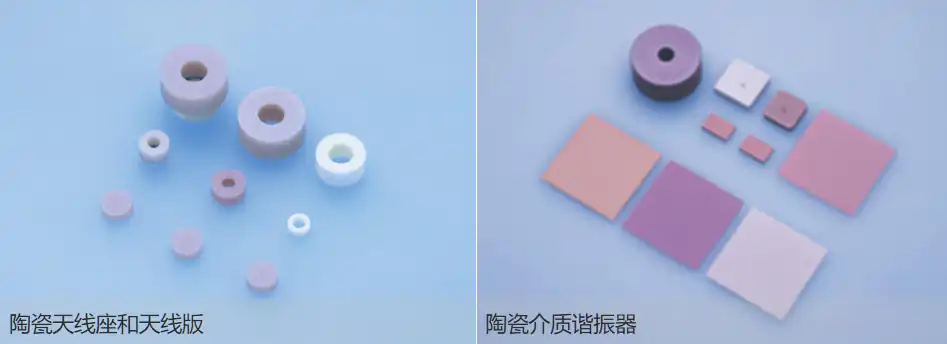
First, magnesium oxide has an extremely low dielectric constant, which is akin to building a “flat highway” for signals. In composite ceramic systems, the addition of magnesium oxide can effectively adjust the overall dielectric constant, leading to lower latency and faster speeds during signal transmission. This is crucial for modern communication devices that require millisecond-level response times.
Second, magnesium oxide possesses a very high quality factor (Q-value). In physics, this represents minimal energy loss within the material. Microwave equipment generates heat during operation; if the material loss is high, it not only wastes electrical energy but also leads to device overheating. The addition of magnesium oxide can significantly improve the Q-value of ceramic materials, ensuring the “purity” of the signal during transmission and reducing energy loss, thereby improving the efficiency and stability of communication systems.
Additionally, the crystal structure of magnesium oxide is highly stable, which grants it excellent temperature compensation characteristics. Electronic devices generate heat during operation, and ambient temperatures also vary. The performance of ordinary materials often drifts with temperature fluctuations, leading to signal frequency distortion. By compositing magnesium oxide with other dielectric materials (such as titanates), ceramic materials with a temperature coefficient of resonant frequency close to zero can be prepared. This means that communication equipment can work consistently and stably, whether in extreme heat or bitter cold.
In addition to serving as an additive, high-purity magnesium oxide itself is a primary raw material for preparing specific microwave dielectric ceramics (such as MgO-based composite ceramics). Especially in the recently emerging 5G and millimeter-wave (mmWave) technologies, where requirements for substrate materials are increasingly stringent, magnesium oxide has become a preferred component in high-frequency circuit substrate materials due to its excellent insulation properties, low dielectric loss, and good compatibility with metal electrodes.
The application of magnesium oxide in microwave dielectric ceramics represents an excellent integration of materials science and communication engineering. With the research and development of frontier technologies such as 6G and satellite communications, the performance requirements for microwave dielectric materials will become even higher. Magnesium oxide, this low-profile “all-rounder” of the materials world, will continue to play an essential role as a cornerstone in building a faster, more stable, and smarter digital world in the future.