
Messi Biology stated that in our daily lives, PVC foam materials are everywhere—from lightweight non-slip bathroom mats to sound-insulating building materials, as well as wood-plastic indoor flooring. These materials are highly favored by the market for their lightweight, durable, and thermal-insulating properties. However, to manufacture PVC foam products with uniform cells, smooth surfaces, and stable performance, a “behind-the-scenes hero” is indispensable: magnesium oxide. In PVC foaming formulations, magnesium oxide is usually referred to as active magnesium oxide. It is not only a basic raw material in the chemical industry but also a key functional additive in PVC processing. What role does it play, and why is it so indispensable?
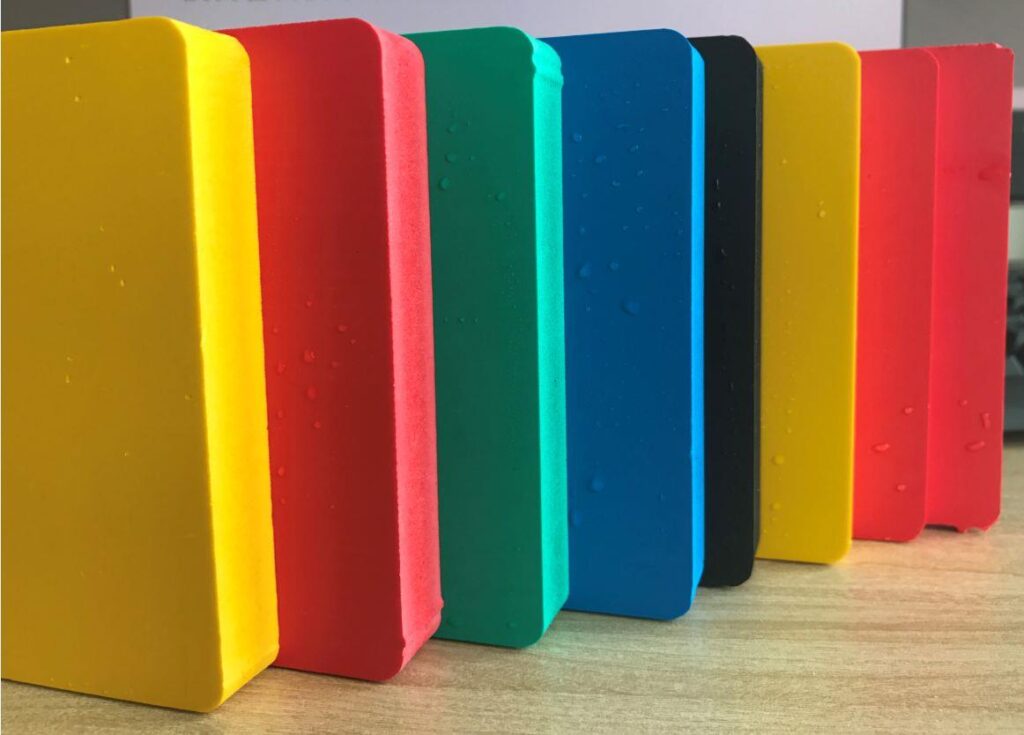
First of all, magnesium oxide is truly a worthy “thermal stabilization partner.” During high-temperature processing, PVC resin is prone to degradation and releases hydrogen chloride (HCl), which not only corrodes equipment but also accelerates material aging. Although stabilizers such as lead salts and calcium-zinc (Ca-Zn) can resolve the main issues, a more precise “regulator” is needed during the foaming process to coordinate with the instantaneous decomposition of the blowing agent at specific temperatures to generate gas. Magnesium oxide possesses excellent thermal stability. It can absorb acidic substances generated during the reaction process, preventing premature decomposition of the blowing agent or discoloration of the product caused by excessive acidity, thereby ensuring that the foaming process proceeds perfectly within a controlled “processing window.”
Secondly, the core role of magnesium oxide lies in its fine-tuned control over “gelation” and “cell structure.” This is the most delicate aspect of PVC foaming technology. During processing, the PVC melt must achieve a certain melt strength to encapsulate the gas generated by the blowing agent without letting it escape, thereby forming a closed-cell structure. If the melt is too “thin” (low viscosity), the gas escapes, resulting in solid sheets or rough surfaces; if the melt is too “viscous,” the gas cannot expand properly, leading to excessively high density.
Magnesium oxide acts as a “regulating valve” here. Specific active magnesium oxide can significantly promote the gelation rate of PVC and increase melt viscosity. It forms a dynamic balance with commonly used lubricants (such as calcium stearate): lubricants reduce viscosity to facilitate flow, while magnesium oxide increases viscosity to lock in gas. By adjusting the dosage and activity level of magnesium oxide, engineers can precisely control the viscoelasticity of the melt, thereby obtaining a uniform, dense, fine, and smooth microcellular structure. In addition, magnesium oxide also serves to improve the surface properties of the material. It effectively prevents the “plate-out” (exudation) phenomenon during PVC processing, making the surface of the finished product smoother and flatter, thus elevating the quality and aesthetic appeal of the product.
Magnesium oxide for PVC foaming is by no means a simple filler, but a high-tech functional additive. Its level of reactivity and particle size directly determine the quality of the final foamed product. In this microscopic chemical world, magnesium oxide acts like a refined conductor, balancing flow and curing, reaction and stability, to create lightweight yet sturdy materials for modern life.