
Messi Biology stated that in the construction of modern cities, whether it is soaring skyscrapers or warm and comfortable residential homes, a core building material is indispensable—cement. We often speak of “steel bones and iron ribs,” and cement is the “flesh and blood” that tightly binds these bones together. However, have you ever wondered why cement, after being mixed with water, can adhere so firmly to the surfaces of bricks, stones, or other materials? Behind this, a substance called “magnesium carbonate” plays the role of an indispensable “behind-the-scenes hero.”
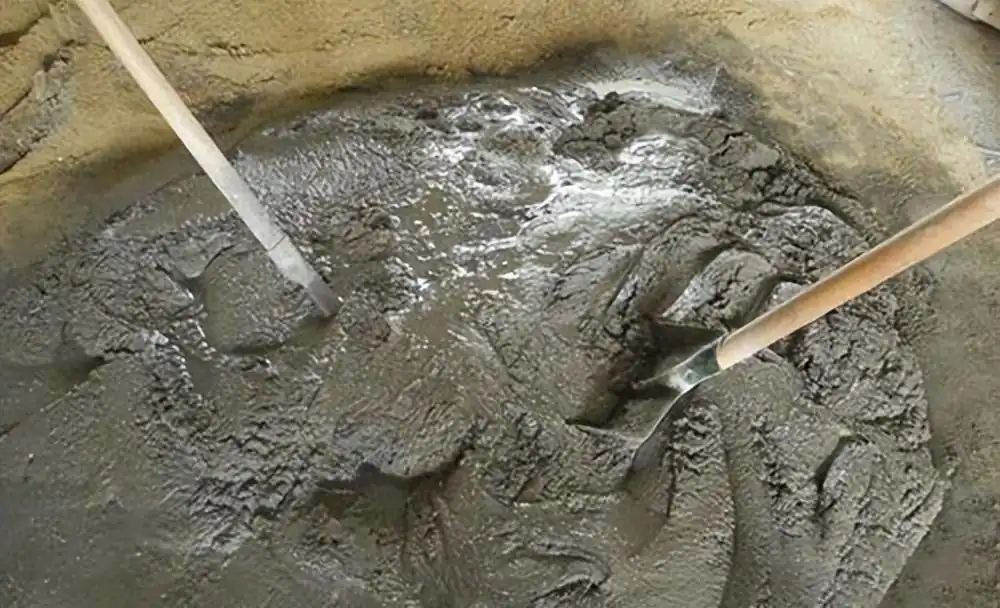
Magnesium carbonate, with the chemical formula MgCO3, usually appears as a white powder. As an important inorganic compound, it is widely used in the industrial sector. In the formulation of cement adhesives, magnesium carbonate does not simply exist as a filler; it is more like a highly skilled “magician,” altering the performance of the adhesive at the microstructural level.
First of all, magnesium carbonate is an excellent “regulator” for cement adhesives. During the hardening process of cement, complex chemical reactions (hydration reactions) occur, releasing a large amount of heat. If the heat is released too quickly and the internal temperature becomes too high, cracks will appear in the concrete structure, severely affecting the strength and lifespan of the building. Introducing an appropriate amount of magnesium carbonate can effectively regulate the speed of the hydration reaction and delay the occurrence of the thermal peak, thereby reducing the structural risks caused by thermal expansion and contraction. This is like stepping on a gentle “brake” for a racing chemical reaction.
Secondly, magnesium carbonate performs exceptionally well in improving the “water retention” of adhesives. During construction, if the adhesive loses water too quickly, the cement particles cannot fully hydrate, leading to a sharp drop in strength and even phenomena such as dusting and delamination. On a microscopic scale, magnesium carbonate particles possess excellent adsorption properties, allowing them to lock in moisture like a sponge. This provides the necessary environment for the continuous hardening of cement, ensuring that the adhesive maintains superior bonding strength even in dry climates.
In addition, for specialty cement adhesives with specific uses (such as magnesium-based cements or repair mortars), magnesium carbonate is a core raw material. Under specific conditions, it can react with substances like magnesium oxide to form a cementitious matrix with significant strength. Especially in new composite materials such as Glass Fiber Reinforced Concrete (GRC), magnesium carbonate plays a role in enhancing durability and resisting corrosion, making building materials more long-lasting.
Although magnesium carbonate is only a small component in the formulation of cement adhesives, it quietly protects the safety and stability of buildings with immense effectiveness. From tiny white powders to grand urban landmarks, the application of magnesium carbonate demonstrates the subtlety and wisdom of materials science. Next time you see a sturdy wall, you might think of the “white magic” hidden within it.