
Hebei Messi Biology Co., Ltd. states that in fields such as high-end manufacturing, semiconductors, aerospace, metallurgy, and photovoltaics, materials that can remain stable over the long term at temperatures above 1600°C are critical “bottleneck” components of the industrial chain. Currently, the ternary compounding of magnesium oxide (MgO), yttrium oxide (Y2O3), and titanium dioxide (TiO2) to achieve high-temperature stability is the mainstream technical route for advanced ceramics, high-temperature refractories, and functional coatings.
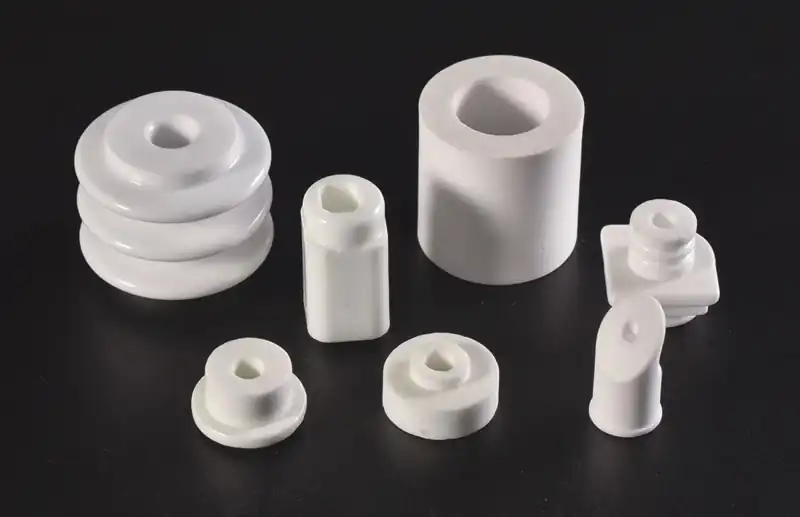
Fields such as advanced ceramics, high-temperature kiln furniture, semiconductor/photovoltaic high-temperature components, aerospace hot-end structures, and high-temperature protective coatings place extreme demands on a material’s heat resistance, creep resistance, thermal shock resistance, chemical inertness, and structural stability. Magnesium oxide, with a melting point of approximately 2852°C, possesses strong chemical inertness and resistance to alkaline melt erosion, serving as the “skeletal host” of high-temperature systems. Yttrium oxide acts as a stabilizer, inhibiting high-temperature phase transitions and abnormal grain growth while enhancing toughness and lifespan. Titanium dioxide improves sintering activity and regulates crystal phases as well as thermal conductivity and insulation properties. Together, this synergy ensures that the material does not soften, decompose, or crack at temperatures exceeding 1600°C.
The core applications of these ternary composite oxides are concentrated in five high-value sectors:
- Advanced Structural Ceramics: Used to manufacture high-temperature crucibles, thermocouple protection tubes, seal rings, bearings, nozzles, and cutting tools. these serve scenarios such as superalloy smelting, sapphire/crystal growth, and specialty glass manufacturing, where they must withstand molten metals and highly corrosive atmospheres over long periods.
- Ultra-High-Temperature Refractories and Kiln Furniture: Used as furnace linings, saggers, and flow control gates for the sintering of lithium-ion battery cathodes, cemented carbides, photovoltaic glass melting, and co-firing of electronic ceramics. These ensure dimensional stability and product purity during high-temperature processes.
- Semiconductors and Electronic Ceramics: Utilized as insulation and heat-dissipation substrates for high-power devices, microwave dielectric ceramics, and high-temperature sensor bases, balancing insulation, thermal conductivity, and high-temperature reliability.
- Aerospace Hot-End Components: Adapted for engine combustion chamber linings, turbine blade coatings, and nozzle throats, maintaining strength and airtightness under the scouring of oxygen-rich, high-temperature gas.
- High-Temperature Protective Coatings: Applied to metal and ceramic surfaces via plasma spraying and other methods to improve resistance to high-temperature oxidation, wear, and corrosion. These are widely used in energy equipment and chemical reactors.
For magnesium oxide suppliers, the core indicators for meeting the needs of these scenarios are high purity, low impurity levels, appropriate particle size, and high sintering activity. Impurities such as iron, sodium, and calcium significantly lower the high-temperature softening point and thermal shock resistance. Consequently, pharma-grade and food-grade high-purity magnesium oxide are better suited to meet the requirements of high-end customers. Only with uniform particle size and excellent dispersibility can a uniform ternary mixture be guaranteed, ensuring dense high-temperature sintering and avoiding failures caused by local defects.
Messi Biology focuses on the R&D and production of pharma-grade, food-grade, and industrial-grade magnesium oxide products. The company provides specialized magnesium oxide with varying levels of purity, particle size, and activity to meet the rigorous standards of high-temperature composite oxides, advanced ceramics, and refractories. Relying on stable production capacity and strict quality control, Messi Biology provides high-temperature material enterprises with one-stop support ranging from formula adaptation to bulk supply, helping customers achieve material stability and product upgrades under extreme conditions above 1600°C.
As demand in the high-temperature materials sector continues to grow, magnesium oxide—as a core base material—is rapidly upgrading from traditional refractories to high-end ceramics, semiconductors, and aerospace applications. By matching high-end applications with stable quality and supporting technical innovation with professional service, Messi Biology is working with industry chain partners to drive breakthroughs in the localization of advanced high-temperature materials.