
Content Overview
With the rapid development of China’s magnesium oxide industry and the continuous growth of downstream demand, the overall market size of China’s magnesium oxide industry has shown an upward trend in recent years. According to data, the market size of China’s magnesium oxide industry reached 25.214 billion yuan in 2022, a year-on-year increase of 17.1%. Among them, light-burned magnesium oxide accounted for 96.6% of the market, while high-purity magnesium oxide accounted for 3.4%.
Keywords: development trend of magnesium oxide industry, competition pattern of magnesium oxide industry, market size of magnesium oxide industry, supply and demand of magnesium oxide industry
1. Overview
Magnesium oxide is an inorganic compound with the chemical formula MgO. It is an oxide of magnesium and an ionic compound, appearing as a white solid at room temperature. It exists in nature as periclase and serves as a raw material for magnesium smelting. Magnesium oxide has high fire resistance and insulation properties. It can be transformed into crystals when calcined at temperatures above 1000°C, and becomes dead-burned magnesium oxide (magnesia clinker) or sintered magnesium oxide at 1500–2000°C.
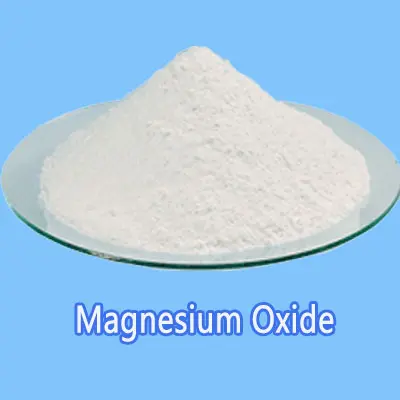
Magnesium oxide is mainly divided into light magnesium oxide and heavy magnesium oxide. With industrial upgrading and the development of high-tech functional material markets, the product categories of magnesium oxide have been continuously enriched. A series of high-end fine magnesium oxide products have been developed and produced for applications including high-grade lubricants, high-grade leather tanning alkalization, food, medicine, silicon steel, high-grade electromagnetic materials, and high-purity magnesium oxide.
2. Industrial Chain
The upstream of the magnesium oxide industry chain covers raw material supply, mainly including magnesite, dolomite, brine, and halite blocks. The midstream involves the production and supply of magnesium oxide. The downstream is mainly used in refractory materials, metallurgy, food additives, medicine, rubber, and other fields.
At present, major domestic customers of the magnesium oxide industry are concentrated in refractory materials, magnesium metals and compounds, agriculture, environmental protection, manufacturing, etc. Specifically, in 2022, refractory materials accounted for the largest share of China’s magnesium oxide downstream demand at 88.4%, followed by magnesium metals and their compounds at 6.5%, and agriculture and other fields at 5.1%.
3. Development Status
Magnesium oxide is classified as a thermal insulation material worldwide, with a thermal conductivity below 0.07 W/(m·K), making it an excellent thermal insulation material. It also features high-temperature stability, with no molecular structure changes up to 1700°C, and is widely used in most steelmaking furnaces globally.
The production of high-purity magnesium oxide from seawater has become a mature technology worldwide, with a higher proportion produced from seawater and brine in Western countries. Facilities have been built and rapidly developed in the United States, Japan, the United Kingdom, Italy, Ireland, Mexico, Norway, Greece, and other countries.
According to data, the global magnesium oxide market size reached 273 million US dollars in 2022, a year-on-year increase of 23.5%; output was 25.993 million tons, up 5.1% year-on-year; demand was 25.898 million tons, up 5.1% year-on-year.
China is one of the world’s major producers of magnesium compounds, but domestic production remains at the crude and primary product stage, far from meeting national economic development needs. As a major variety of magnesium-based products and a basic inorganic salt, magnesium oxide holds an important position due to its excellent performance and wide applications, with decades of production history and generally mature production technology.
In recent years, the expanding applications and fields of industrial magnesium oxide have driven rising demand, stimulating the rapid development of China’s magnesium oxide industry. Data show that in 2022, China’s magnesium oxide production capacity was 22.645 million tons (up 4% year-on-year), output 20.348 million tons (up 4.8% year-on-year), and demand 19.891 million tons (up 5% year-on-year). Light-burned magnesium oxide accounted for 99.4% of production capacity, while high-purity magnesium oxide accounted for 0.6%.
With the rapid development of the industry and sustained downstream demand growth, China’s magnesium oxide market size has maintained an overall growth trend. In 2022, the market size reached 25.214 billion yuan, a year-on-year increase of 17.1%, with light-burned magnesium oxide at 96.6% and high-purity magnesium oxide at 3.4%.
Relevant report: Research Report on China’s Magnesium Oxide Industry Market Supply and Demand Situation and Development Prospects released by Zhiyan Consultancy.
In terms of price trends, China’s overall average magnesium oxide market price grew moderately from 896 yuan/ton in 2015 to 1292 yuan/ton in 2022. For high-purity magnesium oxide, technological progress and increased domestic supply have led to a downward price trend, falling from 17,269 yuan/ton in 2015 to 9,407 yuan/ton in 2022.
In terms of imports and exports, China’s magnesium oxide market is export-oriented, with export volumes far exceeding import volumes. However, high-end magnesium oxide relies on imports due to technological constraints, resulting in a small gap between export and import values. With the rapid growth of domestic demand, China’s magnesium oxide exports have declined in recent years.
In 2022, China imported 18,000 tons of magnesium oxide worth 80 million yuan and exported 475,000 tons worth 773 million yuan. By export destination, the top three regions in 2022 were Japan (23.29%), Taiwan Region of China (14.89%), and Indonesia (2.81%).
4. Competition Pattern
Driven by growing demand, the number of enterprises in China’s magnesium oxide industry has increased significantly. Large manufacturers have expanded production scale and achieved relatively high production and sales rates, while small and medium-sized enterprises face survival difficulties due to small scale, high energy consumption, and unstable product quality.
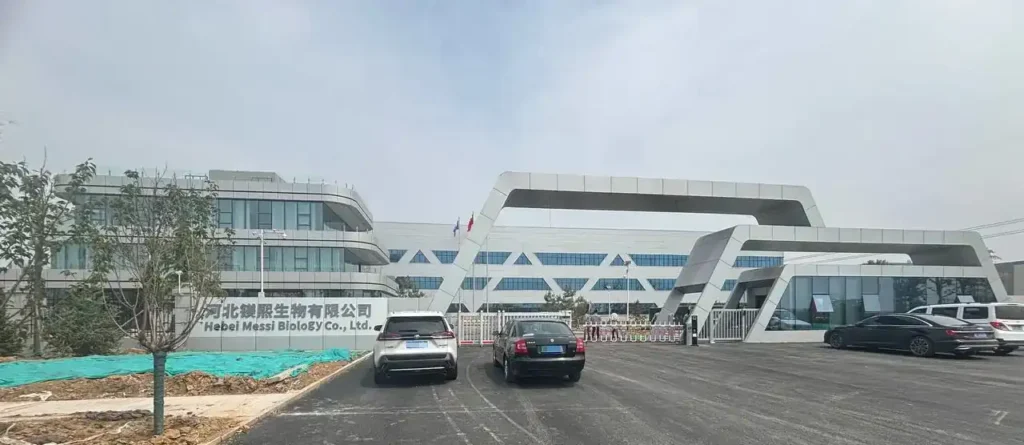
Guided by national industrial policies, the magnesium oxide industry is undergoing internal structural adjustment. It is expected that industry concentration will further improve, large-scale and technologically advanced enterprises will maintain competitive advantages, and small and medium-sized enterprises will gradually be eliminated. Leading domestic enterprises include Hebei Messi Biology Co., Ltd., Henan Qianghong Magnesium Industry Technology Co., Ltd., Shanghai Industrial Zhentai Chemical Co., Ltd., and Haicheng Guangjinyuan Magnesium Oxide Manufacturing Co., Ltd.
5. Development Trends
High-end Product Development
Research and development of magnesium oxide and its deep-processed products in China have gained attention since the 1980s. However, late development has led to problems such as single product types, low grades, small output, and unreasonable consumption structure. This has resulted in oversupply of low-end magnesium oxide, while high value-added products such as high-purity and activated magnesium oxide rely heavily on imports.
To adapt to market changes, China should focus on developing high-performance high-purity activated magnesium oxide, introduce advanced foreign technology and equipment, and shift the industry focus to high-end magnesium oxide to meet domestic demand and enhance international competitiveness. New projects for ordinary magnesium oxide are not recommended.
Gradually Increasing Industrial Concentration
The overall operating rate of domestic magnesium oxide enterprises remains low. Besides weak market prices, excessive capacity expansion and lagging downstream demand are major constraints. Strict environmental protection requirements have also caused production halts at some plants, leading to regional imbalances and upcoming industry reshuffling.
Small and medium-sized enterprises will face growing survival pressure and elimination. Industrial concentration will gradually rise with visible integration effects:
- Active mergers and acquisitions and accelerated enterprise expansion.
- Rapid promotion of brand strategies and market concentration toward strong brands.
Driven by these two factors, industrial concentration will increase steadily.