
Messi Biology has established a cooperative relationship with Hebei University for achievement transformation and technology transfer. For the first time in China, a demonstration project adopting flash cyclone dynamic calcination technology for floatation-purified magnesite powder has been constructed. Industrialization development has been realized on the basis of experiments, together with technology transfer and promotion.
The popularization of this technology enables comprehensive utilization of resources, shortens calcination time, reduces energy consumption, and realizes environmental protection, energy conservation and emission reduction. It sets a demonstration example for the production of similar mineral products such as magnesia kilns, light-burning kilns, fluidized beds and multi-layer furnaces. When promoted and applied in similar mines, it will help the industry reduce dust and other pollutant emissions, meet discharge standards, greatly improve resource utilization rate, save energy and reduce pollutant discharge simultaneously, achieve clean production and promote the development of circular economy. It also provides a good demonstration for the industrial transformation of magnesium-resource-based cities.
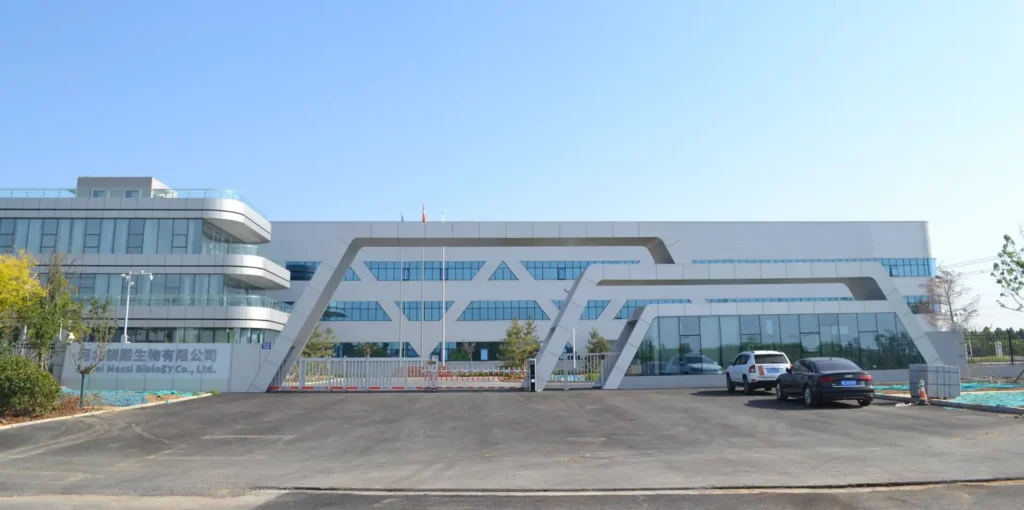
Project Scale
Using low-grade magnesite powder as raw material, the annual output is 30,000 tons of high-purity magnesium oxide and 20,000 tons of magnesium oxide desulfurizer.
Process Flow
Gas from a gas generator (or natural gas) is used as the heat source for calcination. Firstly, waste heat flue gas from the calciner is introduced into the drying host under negative pressure. Raw ore powder or wet powder is continuously fed into the drying host, where rapid mass and heat transfer takes place between the material and hot flue gas, vaporizing water molecules. After dehydration and drying, the moisture content of the material is ≤ 1%, and the drying process is completed within 3–5 seconds.
The dried tail gas enters a cyclone dust collector and a bag filter for gas-solid separation respectively. The filtered and purified tail gas is discharged by an induced draft fan. The material discharged from the dust collector enters a preheater, and after multi-stage preheating, it flows into the flash cyclone dynamic calciner. The powder undergoes sufficient thermal decomposition in the upward rotating airflow, instantly releasing CO₂ and crystal water at high temperature, and decomposing into porous magnesium oxide particles. The calcination process is completed within 3–5 seconds.
The material enters the cyclone gas-solid separator from the calciner along with the negative pressure airflow. The separated powder enters the clinker bin and is discharged through a discharge valve. The hot clinker then enters the negative pressure air cooling system, and after cooling, it is stored in a silo.
Operation Effect
According to three rounds of monitoring and online monitoring of particulate matter, sulfur dioxide and nitrogen oxides:
- Average emission concentration of particulate matter: 8.4 mg/m³
- Average emission concentration of sulfur dioxide: 6 mg/m³
- Average emission concentration of nitrogen oxides: 55 mg/m³
All indicators meet the Emission Standard of Air Pollutants for Magnesia Refractory Industry in Hebei Province (DB21/3011—2018), which specifies limits of 30 mg/m³ for particulate matter, 50 mg/m³ for sulfur dioxide, and 100 mg/m³ for nitrogen oxides.
The boundary particulate matter concentration is below 0.8 mg/m³, complying with the boundary control limits specified in the same standard.
Secondary Pollution Control
Dust collection is designed as an integral part of the calcination system and operates 100% synchronously with production facilities. The dust collection system serves both as environmental protection equipment and a collection device for activated magnesium oxide products after calcination. Through two-stage capture by cyclone and bag filters, the material recovery rate reaches over 99.8%. Synchronous operation of production and environmental protection facilities is ensured in design.
The calcination system is fully enclosed without material leakage, avoiding unorganized dust emission during production.
Cascaded cyclic utilization of heat energy is realized through flash drying of wet raw materials. The inlet air temperature of the flash dryer is 450–650 °C and the outlet temperature is 100–180 °C, realizing cascaded energy utilization and mixed air distribution in the combustion chamber. Since the mixed air has lower nitrogen and oxygen contents than fresh air, the generation of nitrogen oxides is reduced at the source.
Achieved Standards or Performance Requirements
The product quality of the demonstration project complies with industrial standards and meets customer specifications.
- High-activity light-burned magnesium oxide:MgO ≥ 95%, SiO₂ ≤ 0.2%, CaO ≤ 0.7%, Fe₂O₃ ≤ 0.5%,hydration activity 70%–80%, citric acid activity 10–40 seconds.
- High-activity magnesium oxide desulfurizer:MgO ≥ 85%, hydration activity 70%–80%, citric acid activity 30–40 seconds.
Loss on ignition ≤ 2%–4%.
Operation Status
Since commissioning, the demonstration project has operated stably and continuously without any accidents. All supervision and inspections by ecological and environmental authorities have met design and environmental protection requirements.
The concentrations of particulate matter, sulfur dioxide and organized exhaust gas at the environmental protection discharge outlets of the flash cyclone dynamic calcination system meet both national emission standards and the limits specified in DB21/3011—2018, as well as the requirements of the EIA approval document.
Measures for Carbon Emission Reduction
The demonstration project uses calcination waste heat to rapidly disperse, dry and dehydrate raw or wet powder, restoring the original particle size. The dry powder is preheated before entering the flash cyclone dynamic calciner, where it is instantly dispersed by high-temperature rotating airflow to maximize the specific surface area.
Sufficient thermal decomposition occurs in the upward rotating hot gas flow, releasing CO₂ and crystal water to form porous magnesium oxide particles. The calcination process is completed within 3–5 seconds, avoiding over-calcination and under-calcination. It reduces energy consumption and reserves an interface for carbon dioxide capture and utilization.
Carbon Emission Reduction Effect
This demonstration project is the first in China to adopt a combined process of flash drying and flash cyclone dynamic calcination for producing high-activity magnesium oxide. The short calcination time and sufficient, thorough heat exchange result in high hydration and citric acid activity.
Fuel consumption is 0.21 tons per ton of product, compared with 0.27–0.3 tons per ton of product in traditional light-burning processes, showing significant effects in energy saving and carbon reduction.