
Messi Biology states that in fields such as polymer materials and pharmaceutical chemicals, magnesium acetylacetonate is highly favored as a multifunctional compound, while magnesium hydroxide is the indispensable core raw material in its synthesis process. This seemingly ordinary inorganic compound, with its unique chemical properties, lays the foundation for the efficient preparation and superior performance of magnesium acetylacetonate.
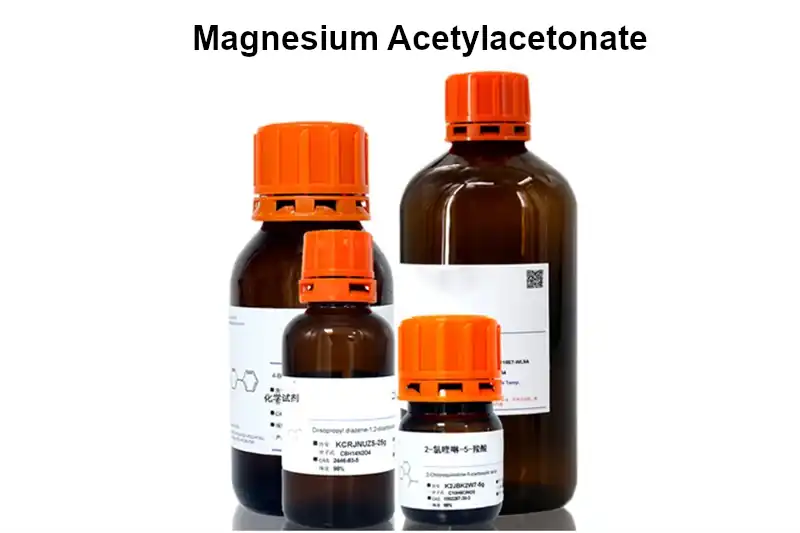
Magnesium Hydroxide: The Key “Magnesium Ion Provider”
Magnesium hydroxide [Mg(OH)₂] plays the critical role of a “magnesium ion donor” in the synthesis of magnesium acetylacetonate. Traditional synthesis methods often face challenges such as low yields and significant pollution. However, the “one-step heterogeneous precipitation-transformation method”—using magnesium hydroxide and acetylacetone as raw materials with ethanol as the solvent—has completely changed this situation. Within the reaction system, magnesium hydroxide provides stable magnesium ions that undergo a coordination reaction with the active groups of acetylacetone, efficiently generating magnesium acetylacetonate dihydrate [Mg(acac)₂·2H₂O]. This synthesis path is not only simple to operate but also achieves high yields and environmental goals by avoiding secondary pollution, overcoming the drawbacks of traditional processes.
Impact on Final Performance
As a raw material, the characteristics of magnesium hydroxide directly influence the final performance of magnesium acetylacetonate. Magnesium hydroxide with standard purity and stable crystallization ensures that the product purity exceeds 98%, with magnesium content controlled within the ideal range of 9.16%–9.65%. This high-quality magnesium acetylacetonate demonstrates excellent auxiliary thermal stability in Polyvinyl Chloride (PVC) processing. When compounded with a primary thermal stabilizer at a mass ratio of 3:5, it can extend the thermal stability time of PVC to 57 minutes, effectively inhibiting thermal degradation during processing and use, thereby extending the product’s lifespan.
From Synthesis to Diverse Scenarios
Beyond its core application in synthesis, the performance link between magnesium hydroxide and magnesium acetylacetonate extends to multiple end-user scenarios. Whether magnesium acetylacetonate is used as a stabilizer for polymer materials, a catalyst precursor in organic synthesis, or a modifier for film coatings, its performance advantages stem from the stable magnesium ion framework provided by magnesium hydroxide. In the pharmaceutical field, where magnesium acetylacetonate serves as a precursor for magnesium-based drugs, its biocompatibility is closely related to the purity control of the raw material magnesium hydroxide. Furthermore, magnesium hydroxide itself can be used as a food-grade magnesium supplement, reflecting a synergy between the raw material and the final product across various applications.
The Advantage of “Mild Reactivity”
It is worth noting that the mild reactivity of magnesium hydroxide during the process is crucial. Compared to other magnesium sources, its moderate alkalinity prevents structural defects in the product caused by localized over-alkalinity in the reaction system. It also reduces side reactions, ensuring the structural integrity of the magnesium acetylacetonate. This “gentle supply” characteristic makes it an irreplaceable raw material choice for the green synthesis of magnesium acetylacetonate.
From laboratory synthesis to industrial application, magnesium hydroxide, with its unique chemical properties, serves as an important bridge connecting inorganic raw materials to high-performance organometallic compounds. It not only solves the challenges of efficient and clean production of magnesium acetylacetonate but also, through performance transfer, allows this compound to play a key role in multiple fields, highlighting the core value of inorganic materials in the fine chemical industry.