
Messi Biology states that, owing to its triple properties of a high melting point, high electrical insulation resistance, and moderate thermal conductivity, magnesium oxide (MgO) has become an irreplaceable core inorganic filler in high-temperature insulating adhesive systems. It is widely used in key scenarios such as electric heating device encapsulation, power electronics potting, and refractory-layer composite adhesives. The following elaborates on four aspects: intrinsic performance origins, working mechanisms, typical applications, and key selection criteria.
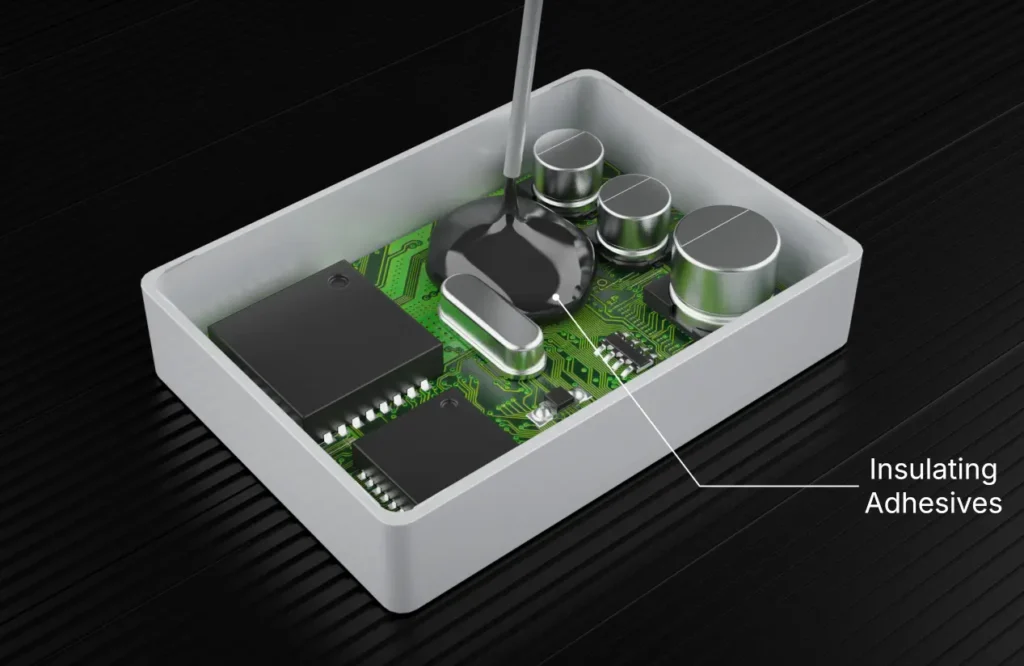
Magnesium oxide has a melting point as high as 2852°C, far exceeding that of copper (1083°C) and the softening temperature of stainless steel. Under high-temperature operating conditions, it neither melts, decomposes, nor releases flammable gases. Its crystal lattice structure is stable, with a bandgap close to 7.8 eV and a room-temperature volume resistivity reaching 10¹²–10¹⁴ Ω·cm; even at 1000°C, it remains close to the insulation level of a high-purity single crystal. Meanwhile, tapped magnesium oxide powder achieves a thermal conductivity of 2–3 W/(m·K)—with even higher theoretical values—far surpassing air and most organic fillers, allowing it to reconcile the natural contradiction between “electrical insulation” and “thermal conductivity.” These three intrinsic properties determine its core position in high-temperature insulating adhesives. In high-temperature insulating adhesive systems, magnesium oxide is typically dispersed uniformly in powder form within matrices such as silicone, epoxy resin, phenolic resin, or polyurethane (PU). Its functional mechanisms are primarily manifested in three aspects:
First, constructing thermally conductive pathways. Magnesium oxide particles bridge and contact one another within the matrix to form a continuous thermally conductive network, rapidly channeling heat from heating elements to the housing or heat-dissipation interface and preventing localized heat buildup that could cause resin carbonization.
Second, maintaining high-temperature insulation. Magnesium oxide itself is an excellent electrical insulator, and its coefficient of thermal expansion (approximately 10 ppm/°C) lies between that of metals and resins. This buffers the thermal stress generated by alternating hot and cold cycles, suppressing cracking in the encapsulation layer and the formation of creepage paths.
Third, participating in curing and reinforcement. As a basic oxide, magnesium oxide can neutralize residual acidic components from resin synthesis, lower the crosslinking activation energy, and shorten the curing cycle, while simultaneously increasing adhesive hardness and heat deflection temperature.
In the field of tubular heating element insulation filling, magnesium oxide powder is packed between the resistance wire and the metal sheath, fulfilling four tasks: electrical isolation, heat conduction and uniform heat distribution, securing the heating wire, and resisting high-temperature deformation—extending the upper temperature resistance limit from 400°C for standard grades to over 650°C for modified grades. In power electronics packaging, high-purity magnesium oxide is incorporated into silicone gels or epoxy potting compounds for high-voltage, high-temperature devices such as IGBT modules, new energy vehicle (NEV) inverters, and LED light sources, improving thermal conduction efficiency while blocking leakage current. In refractory and specialty insulation applications, magnesium oxide is compounded with phenolic resin to produce high-temperature-resistant insulating adhesives, used in circuit breakers, igniters, automotive distributor caps, mineral-insulated cables, and other applications with stringent high-temperature stability requirements.
It is worth noting that most failures in high-temperature insulating adhesives are not caused by magnesium oxide itself being “unable to withstand high temperatures,” but rather by excessive impurities, moisture absorption and efflorescence (salt weeping), or improper particle size gradation. Therefore, strictly controlling raw material purity, optimizing particle size distribution, and combining these with end sealing and low-temperature baking pretreatment are key to ensuring the long-term stable operation of high-temperature insulating adhesives. With the continued upgrading of new energy vehicles, 5G communications, and high-end equipment manufacturing, both the depth and breadth of high-purity nano-magnesium oxide applications in thermally conductive and insulating composite adhesives will continue to expand.