
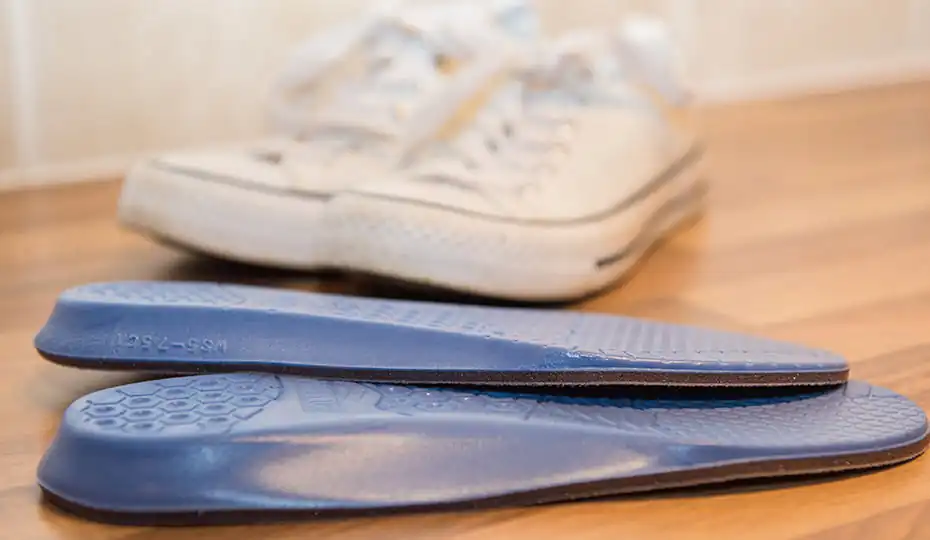
Messi Biology states that many of the sneakers and casual shoes we wear daily utilize PVC foam soles. Behind their lightweight, soft, non-slip, and wear-resistant characteristics lies a key mineral additive—magnesium oxide. This seemingly ordinary white powder plays multiple roles during the PVC foaming process, silently safeguarding the quality and performance of the shoe sole.
PVC (polyvinyl chloride), as a commonly used polymer material, is prone to thermal degradation during foaming at processing temperatures of 170–200°C. This process releases corrosive hydrogen chloride (HCl) gas, which causes the soles to turn yellow, become brittle, or even crack. The primary mission of magnesium oxide is to act as an “acid-base neutralization expert.” Through a chemical neutralization reaction (MgO+2HCl→MgCl₂+H₂O), it absorbs harmful gases while forming thermally stable magnesium chloride, thereby halting the degradation chain reaction. Industrial data indicates that adding only 0.1–0.5 phr (parts per hundred resin) of magnesium oxide can extend the thermal stability time of PVC by more than 30%.
In an era where lead-free environmental protection has become the industry trend, magnesium oxide is the core of eco-friendly formulations. Following the gradual phasing out of traditional lead salt stabilizers, calcium-zinc (Ca-Zn) composite stabilizers have become the mainstream. However, these systems still require magnesium oxide to assist in neutralizing residual acidic substances. Working synergistically with Ca-Zn stabilizers, it ensures long-term stability and prevents the “zinc burning” phenomenon—the blackening issue that often occurs when zinc oxide is used alone. More importantly, magnesium oxide is processed from natural minerals; it is non-toxic, odorless, and its formaldehyde and VOC (volatile organic compound) content are below detection limits, fully complying with environmental standards.
Magnesium oxide also serves as a “lubricant” to enhance processing efficiency. Its fine powder can be uniformly dispersed within the PVC resin, reducing friction between particles and lowering melt viscosity. This allows the foaming material to flow more smoothly within the mold, which not only prevents surface defects such as bubbles or burrs but also reduces energy consumption, increasing the finished product qualification rate by more than 15%. For foam soles striving for lightweight comfort, another major contribution of magnesium oxide is the regulation of the cell structure. It works in tandem with foaming agents to guide the formation of uniform and delicate micro-pores, allowing the sole density to drop from 1.17 g/cm³ to as low as 0.285 g/cm³ while maintaining excellent elasticity and support.
Selecting the appropriate magnesium oxide is vital for sole performance. The industry typically utilizes active magnesium oxide with an activity level ≥120%, as its high specific surface area enhances adsorption and reaction efficiency. In formulas with special requirements for oil and wear resistance, the dosage of magnesium oxide can be appropriately increased to 40–50 parts. When combined with rubber-plastic alloys and coupling agents, it can help the sole achieve a tensile strength of 5.5 MPa and an elongation at break exceeding 200%. This multifunctional synergistic effect makes magnesium oxide an irreplaceable key additive in PVC foam soles.
From chemical stabilization to processing optimization, and from environmental safety to performance enhancement, magnesium oxide empowers PVC foam soles through its multifaceted roles. This “invisible hero” hidden within the sole utilizes the power of minerals to interpret the sophistication of materials science, ensuring that every step we take is more comfortable and durable.