
Injectable pharmaceuticals come into direct contact with drug solutions. As a critical packaging component, pharmaceutical bromobutyl rubber stoppers have drug compatibility, extractables and leachables control, and puncture performance that directly impact drug storage stability and clinical safety. In halobutyl rubber formulations, active magnesium oxide is an irreplaceable functional additive. Messi Biology has developed dedicated magnesium oxide products tailored to the pharmaceutical packaging industry, meeting the stringent production requirements of primary packaging manufacturers.
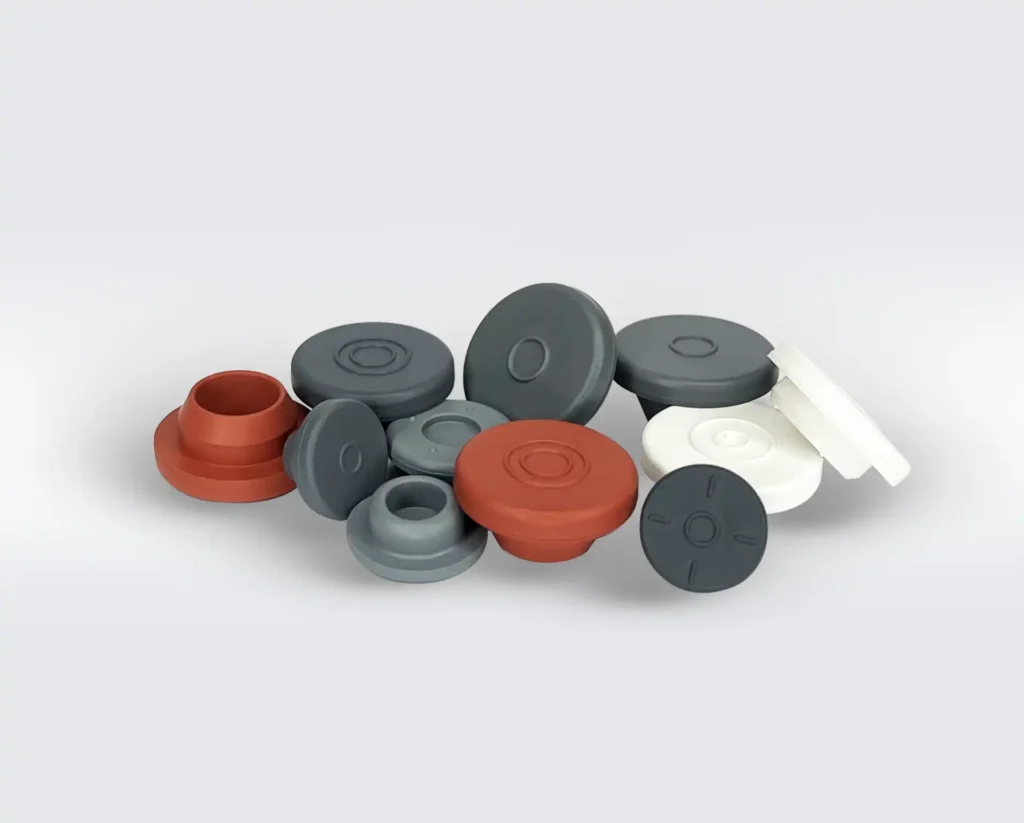
During the high-temperature vulcanization and molding process of bromobutyl rubber stoppers, thermal degradation of rubber molecules generates acidic by-products such as hydrogen bromide (HBr). If not promptly neutralized, these acidic substances can degrade the rubber macromolecular structure and diminish the mechanical properties of the stopper. Furthermore, residual acidic components may gradually migrate and leach out, interacting with the injectable solution, altering its pH, and causing risks such as clarity issues or excessive particulate matter. Acting as an acid scavenger, magnesium oxide neutralizes the acidic substances generated during curing, stabilizes the rubber compound, reduces the risk of harmful leachables, and ensures excellent compatibility between the stopper and various injectable medications.
Beyond its role as an acid scavenger, magnesium oxide acts as a vulcanization activator. It regulates the curing rate of the butyl rubber compound, facilitating a more uniform and thorough cross-linking network while mitigating issues such as under-curing, surface defects, and particle shedding (fragmentation). Once vulcanized, the stoppers exhibit enhanced tensile strength and elasticity alongside more reliable puncture performance. During filling, capping, and clinical piercing, the stoppers are far less prone to fragmentation or shedding, significantly lowering the risk of particulate contamination in drug solutions. Additionally, magnesium oxide enhances the thermal aging resistance of the rubber. Because injectables typically undergo high-temperature terminal sterilization, the degradation of stopper hardness and elasticity remains well within acceptable limits during autoclaving and long-term storage—maintaining robust container closure integrity (CCI) and preventing seal failure throughout the drug’s shelf life.
The pharmaceutical packaging industry enforces rigorous quality standards for inorganic powder impurities. Heavy metals, hydrochloric acid-insoluble substances, and black/white speck impurities in magnesium oxide must all be tightly controlled. Messi Biology manufactures its pharmaceutical-grade magnesium oxide on dedicated production lines with multi-point testing across the entire process, providing a comprehensive Certificate of Analysis (CoA) with each batch. Featuring uniform particle size distribution and superior compounding dispersibility, it prevents the formation of particulate defects inside the rubber matrix. It is versatile enough to support stopper formulations across multiple dosage forms—including powder injection vial stoppers and large-volume infusion bottle stoppers—helping pharmaceutical packaging enterprises consistently manufacture high-quality bromobutyl rubber products.