
Currently, the total annual demand for electrical grade magnesium oxide (EGM) in China has reached 100,000 to 116,000 tons, while the global market demand exceeds 250,000 tons. This demand continues to grow rapidly year by year. However, in China, only a few companies—such as Liaoning Jiashun, Dashiqiao Meir, Dandong Taihua, Shanghai Industrial Zhentai, and Songliao Magnesia—possess large-scale production capabilities, while the capacity of other small-scale enterprises remains limited.
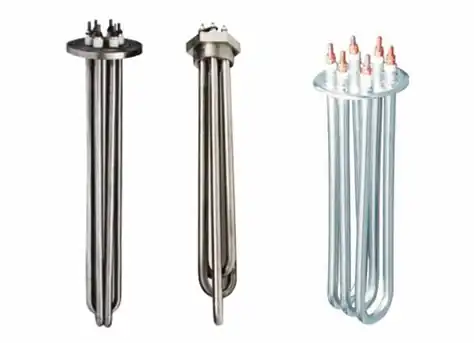
Electrical grade magnesium oxide is characterized by excellent insulation properties and rapid heat transfer, making it an ideal insulating filler material for electric heating elements. Based on the operating temperatures of these elements, EGM products are categorized into three main types: high-temperature, medium-temperature, and low-temperature.
EGM products are manufactured using fused magnesia, which is produced by electromelting high-quality magnesite or sintered magnesium oxide. To be used as an ideal filler for electric heating elements, the fused magnesia must meet specific electrical performance standards (including insulation resistance, dielectric strength/voltage resistance, and leakage current) as well as rigorous chemical indicators. Only fused magnesia that meets these criteria is classified as specialized electrical grade magnesium oxide.
Globally, China is the primary region for both the production and consumption of EGM and electric heating elements. The leading domestic producers include Liaoning Jiashun Chemical Technology Co., Ltd., Dashiqiao Meir Magnesium Products Co., Ltd., Dandong Taihua Electric Heating Material Co., Ltd., Shanghai Industrial Zhentai Chemical Co., Ltd., and Hebei Messi Biology Co., Ltd. The primary raw material for EGM is magnesite. China holds 21% of the world’s magnesite reserves and provides 67% of global production. Within China, Liaoning Province possesses the most abundant reserves, accounting for 85.6% of the national total, giving the local EGM industry a significant geographical advantage.
According to the “2019-2023 China Electrical Grade Magnesium Oxide Market Analysis and Development Prospect Research Report” published by the Newsijie Industry Research Center, the top five domestic enterprises have a combined annual production capacity of 75,000 tons. Given that China’s annual demand is between 100,000 and 116,000 tons and global demand is over 250,000 tons, there is a clear supply gap, especially as smaller enterprises have limited output.
Presently, most EGM enterprises in China still utilize traditional, outdated processes, resulting in issues such as small production scales, obsolete equipment, serious pollution, limited product variety, and low-end quality. To overcome this passive situation characterized by fragmentation and low productivity, it is essential to establish backbone enterprises with higher levels of automation and stable product quality. This will push the magnesium oxide industry to a new level of development and satisfy the needs of the national economy.
Industry researchers from Newsijie believe that while China’s demand for high-end EGM is increasing annually, there is a significant domestic supply deficit, particularly for high-purity and high-temperature EGM products. Currently, domestic products struggle to compete with renowned international brands. China needs to achieve breakthroughs in scientific research and technology, specifically in improving fused magnesia smelting techniques and meeting higher quality standards. By addressing disordered competition and the practice of passing off inferior products as high-quality ones, the electrical grade magnesium oxide industry can achieve healthy and rapid growth in quality.