
As a commonly used food additive, the quality and safety of food-grade magnesium oxide are directly related to food quality and human health. The core answer is clear: China enforces the national standard GB 1886.216-2016, with a purity requirement (MgO content after ignition) of 96.0%–100.5%. International standards are similar to China’s limits, and high-end products usually have a purity of ≥98%. This article explains the complete standard system and purity details in full.

I. Core Domestic Standard: Full Analysis of GB 1886.216-2016
China’s National Food Safety Standard, Food Additive – Magnesium Oxide (GB 1886.216-2016) is the mandatory standard for food-grade magnesium oxide, covering three core requirements: organoleptic, physicochemical, and impurity limits. It applies to both light and heavy food-grade magnesium oxide.
1. Organoleptic Requirements: Basic Appearance and State Control
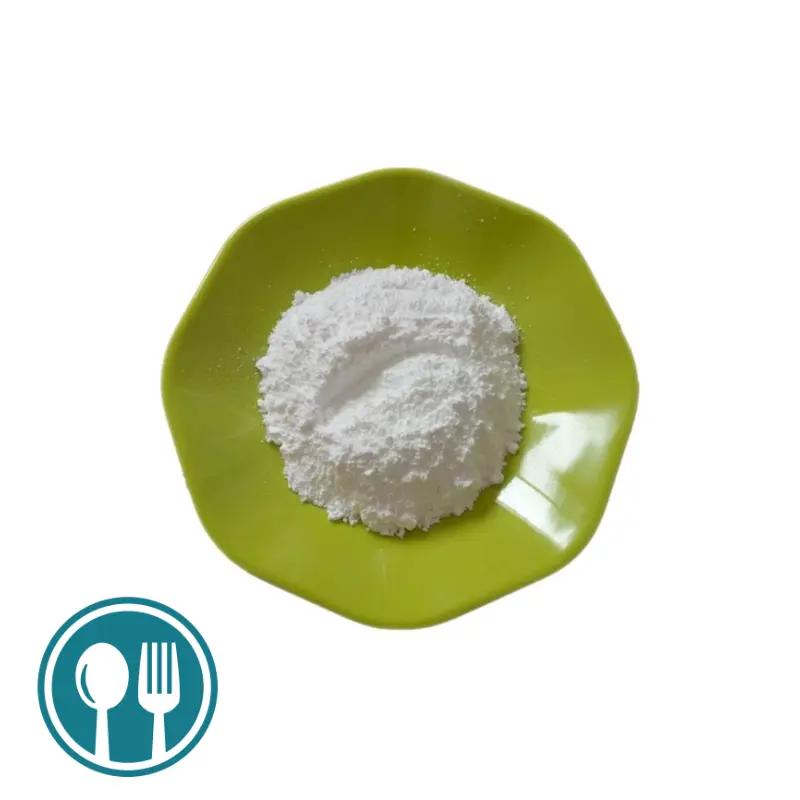
As the first step of visual screening, the product must be a white powder, free of visible impurities and odors.
The inspection method is simple: place an appropriate sample in a 50 mL beaker and directly observe its color and state under natural light to determine compliance.
2. Core Physicochemical Indicators: Purity and Key Performance Parameters
Physicochemical indicators are central to the standard, with purity being the most critical. Strict limits are also set for impurities, stability, and other parameters, as detailed below.
| Indicator Item | Limit Requirement | Test Method / Notes |
|---|---|---|
| Magnesium oxide (MgO, after ignition) content | 96.0%~100.5% | EDTA titration: first determine total calcium and magnesium content, then subtract calcium content to obtain magnesium oxide purity |
| Calcium oxide (CaO) content | ≤1.5% | Titration with calcon-carboxylic acid sodium salt indicator, controlled to eliminate interference from calcium impurities |
| Acid-insoluble substance content | ≤0.1% | Dissolve in hydrochloric acid, filter and weigh; prevents residual insoluble impurities from entering the body |
| Loss on ignition | ≤5.0% | Ignite to constant weight at 950±25°C; reflects moisture and volatile impurity content |
| Free alkali / Soluble salts | Pass test (no abnormality) | Avoids excessive alkalinity irritating the gastrointestinal tract, or salts affecting food taste and texture |
3. Impurity Safety Limits: Strict Control of Heavy Metals and Contaminants
Food-grade magnesium oxide enforces microgram-level limits for harmful impurities such as heavy metals to eliminate health risks. The core requirements are:
- Arsenic (As) ≤ 3.0 mg/kg
- Lead (Pb) ≤ 2.0 mg/kg (consistent with some literature and international standards)
- Mercury (Hg) ≤ 0.1 mg/kg
- Cadmium (Cd) ≤ 1.0 mg/kg
- Total heavy metals (as Pb) ≤ 10 mg/kg
Testing must use Atomic Absorption Spectrometry (AAS) or Inductively Coupled Plasma Mass Spectrometry (ICP-MS) to ensure accuracy.
4. Microbiological Indicators: Aseptic Control
It must meet general microbiological requirements for food additives:
- Total plate count ≤ 1000 CFU/g
- No detection of pathogenic bacteria such as coliforms and Salmonella
Aseptic packaging is required during production, and storage must be sealed and moisture-proof to prevent microbial contamination.
II. Main International Standards: Similarities and Differences with Domestic Standards
Core indicators of global food-grade magnesium oxide standards are consistent, with only minor detail variations. Major standards include the U.S. FCC and EU E530.
| Standard System | Purity Requirement | Core Heavy Metal Limits (Pb / As) | Key Features |
|---|---|---|---|
| China GB 1886.216-2016 | 96.0%~100.5% | Pb≤2mg/kg, As≤3mg/kg | Mandatory national standard; covers both light and heavy magnesium oxide |
| US FCC (Food Chemicals Codex) | ≥96.0% | Pb≤2mg/kg, As≤3mg/kg | GRAS certification; emphasizes compliance with usage scenarios |
| EU E530 (Food Additive Regulation) | ≥96.0% | Pb≤2mg/kg, As≤3mg/kg | Clearly defines scope of use; must meet label identification requirements |
Industry Unspoken Rule: “Above-Standard” Requirements for High-End Products
Internal control standards of international high-end nutrition customers (e.g., Nestlé, Amway) are usually stricter than national and international general standards.
Examples:
- Lead ≤ 0.5 mg/kg
- Arsenic ≤ 0.8 mg/kg
- Stable purity above 98.5%
- Batch-to-batch variation coefficient below 1.2%
These meet stringent demands for health products and infant food.
III. Core Impact of Purity Requirements: Why Higher Is Not Always Better
The purity of food-grade magnesium oxide must balance safety, functionality, and cost; higher purity is not necessarily better.
1. Matching Purity with Functionality
- As an anticaking agent in flour and milk powder: 96%–98% purity is sufficient; excessive purity increases production costs.
- As a nutritional fortifier: purity ≥98% is required to ensure stable magnesium content.
2. Relationship Between Purity and Impurities
The key to improving purity is reducing impurities, not simply increasing MgO proportion. Pursuing purity alone while ignoring impurities may lead to excessive heavy metals and acid-insoluble substances, violating safety standards.
3. Cost Constraint: Process Cost of High Purity
Raising purity from 96% to 99% requires a four-stage refining process:
acid dissolution → impurity removal → precipitation → calcination
Impurity removal accounts for 38%–42% of total costs, and the final product price roughly doubles.
IV. Standard Implementation: Testing Methods and Procurement Verification
After understanding the standards, compliance must be ensured through standardized testing and procurement verification. Key points:
1. Core Testing Methods
- Purity: EDTA titration at pH ≈10 in buffer solution, using eriochrome black T as indicator.
- Heavy metals: Atomic absorption spectrometry after microwave digestion.
- Microbiology: Plate count method.
2. Procurement Verification Points
- Obtain third-party test reports (CMA/CNAS certified), focusing on purity, heavy metals, and microbiological indicators.
- Confirm labeling shows “food additive” and “GB 1886.216-2016”; reject industrial-grade products.
- Store in sealed, moisture-proof conditions, separate from acidic and toxic/hazardous substances to avoid contamination.
V. Frequently Asked Questions (Q&A): Key Doubts About Standards and Purity
1. Q: Is food-grade magnesium oxide unqualified if purity exceeds 100.5%?
A: Not necessarily. Due to minor testing errors, the national standard allows a ±0.5% fluctuation. Slightly exceeding 100.5% is still acceptable if all other indicators meet requirements.
2. Q: Are domestic and international standards interchangeable?
A: Generally yes. Core indicators (purity, heavy metal limits) are consistent. Only additional labeling (e.g., EU E530) is needed for export to comply with local scope requirements.
3. Q: Can industrial-grade magnesium oxide (95% purity) replace food-grade?
A: Absolutely not. Industrial-grade has no heavy metal or microbiological controls; lead and arsenic levels can be 10–100 times those of food-grade, causing heavy metal accumulation and poisoning if ingested.
4. Q: How to quickly verify compliant food-grade magnesium oxide?
A: Prioritize third-party test reports for purity, lead, and arsenic. For simple screening: check appearance (white uniform powder) and react with hydrochloric acid – no obvious precipitate usually indicates acceptable acid-insoluble substances.
Summary: Standards Focus on “Safe, Controllable, and Application-Matched”
The core standard for food-grade magnesium oxide is GB 1886.216-2016, mandating a purity of 96.0%–100.5%, along with strict controls on heavy metals, microorganisms, and other impurities. International standards are highly consistent with China’s, and high-end products can be upgraded to ≥98% purity as needed.
Whether in production, procurement, or use, the core is to verify indicators against standards, balance functionality and cost, and strictly prohibit industrial-grade products from replacing food-grade. Only standard-compliant food-grade magnesium oxide guarantees food safety.