
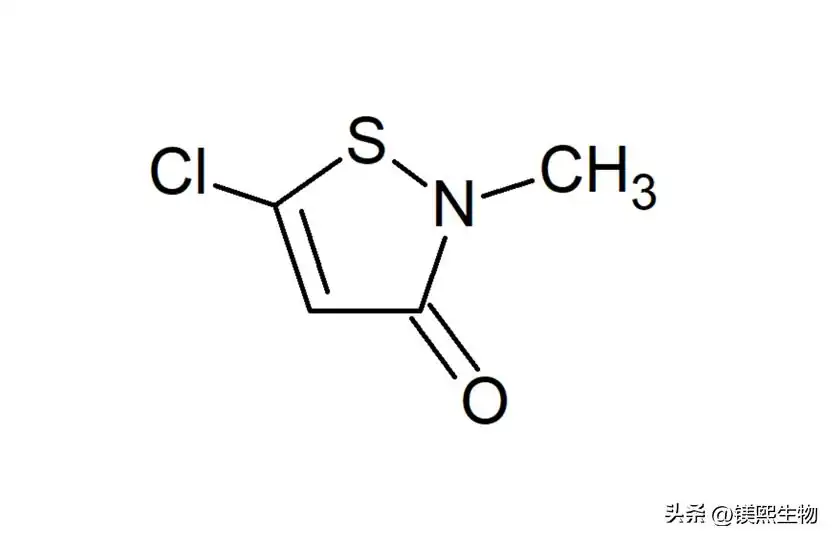
Messi Biology states that isothiazolinone preservatives (such as CMIT/MIT, BIT, OIT, etc.) possess broad-spectrum and high-efficiency antibacterial capabilities and are widely used in coatings, adhesives, cleaning agents, cosmetics, and water treatment agents. However, these active substances are prone to degradation under alkaline or high-temperature conditions. Furthermore, in some systems, they release too rapidly, which can easily lead to increased irritation or loss of activity. To address these issues, introducing Magnesium Hydroxide (Mg(OH)₂) as a carrier or auxiliary component can achieve sustained release and pH stability, thereby extending the duration of the antiseptic activity of isothiazolinones.
I. Analysis of Sustained Release Performance
- Surface Adsorption:
- Magnesium Hydroxide possesses a good specific surface area and a porous structure, enabling it to adsorb a portion of the isothiazolinone molecules.
- The adsorbed isothiazolinones are released gradually within the system, avoiding high concentrations in a short period that could lead to irritation or loss of efficacy.
- Micro-environment Regulation:
- In compound systems, Magnesium Hydroxide acts as a carrier to regulate the pH of the micro-environment.
- This regulation helps reduce isothiazolinone decomposition caused by pH fluctuations, thereby achieving “dynamic sustained release.”
- Extending Validity Period:
- Sustained release not only improves the utilization rate of the preservative but also extends the product’s antibacterial cycle.
- It is particularly suitable for water-based coatings and emulsion systems that require long-term storage.
II. Analysis of Buffering Performance
- Mild Alkaline Regulation:
- Isothiazolinones are relatively sensitive to pH; environments that are too acidic or too alkaline can cause deactivation.
- As a weakly alkaline substance, Magnesium Hydroxide releases OH⁻ slowly when reacting with water or acidic components. It possesses buffering capabilities, maintaining the pH in a neutral to slightly alkaline range (pH 7~8.5).
- Inhibiting Degradation Reactions:
- In certain formulations, catalytic degradation reactions triggered by metal ions or amines can be mitigated by Magnesium Hydroxide, which buffers pH fluctuations and reduces the probability of reaction.
- This buffering effect is particularly helpful in maintaining the stability of isothiazolinones during long-term storage.
- Reducing Side Reaction Products:
- In systems with significant pH fluctuations, isothiazolinones are prone to react with amines, alcohols, and phenols to generate toxic byproducts.
- Magnesium Hydroxide indirectly inhibits these side reactions by stabilizing the pH, which is conducive to improving product safety.
III. Application Examples
- Industrial Preservative Formulations: Utilizing Magnesium Hydroxide + BIT is suitable for inks or glues used in high-temperature and humid environments.
- Water Treatment Biocides: Adding Magnesium Hydroxide to cooling circulating water increases the service life of isothiazolinones and reduces dosing frequency.
- Water-based Coatings: Mg(OH)₂ particles act as a dispersion body, delaying the release of CMIT and reducing initial irritation.