
Think about it—antiperspirant is actually quite a “crazy” product. By adding just a little bit of aluminum salt, the impossible becomes possible. Aluminum salts plug the sweat glands to block sweat production, which often feels more effective than standard deodorants because they stop odors at the source by preventing the sweat from ever appearing.
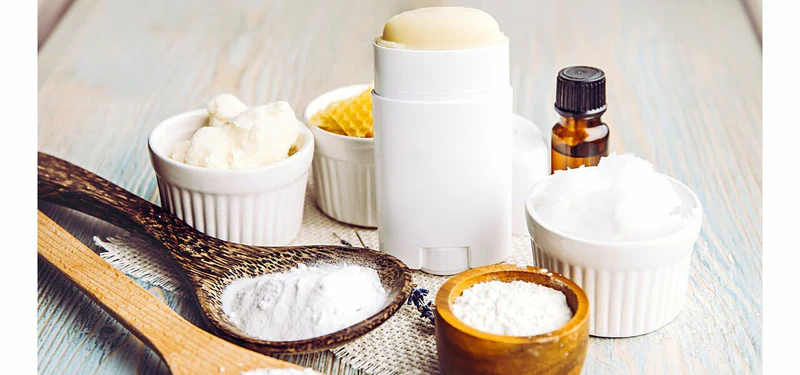
However, due to the various potential health risks associated with aluminum salts, many people are gradually switching to natural deodorants. If you are one of them, let “The Fragrance Room” (引香室) deconstruct the secret weapons of natural deodorants for you. We’ll show you exactly how they work to make odors disappear without the use of aluminum.
The problem is that, much like the current “Green Beauty” trend, many natural deodorant brands on the market don’t explicitly tell you what ingredients they are actually using. Unlike antiperspirants, which almost all rely on aluminum salts, natural deodorant brands use various methods and ingredients to eliminate odor.
So, if you’ve tried your first natural deodorant and found the results underwhelming, “Wait a minute!” before you switch back to aluminum. Give us five minutes to explain—there are eight main ingredients used to stop odor in natural deodorants, and one of them is bound to be a perfect match for your body chemistry!
Secret Weapon 1: Baking Soda
Pros:
Baking soda is the most popular deodorizing raw material in natural deodorants. There are many choices in terms of fragrance, style, and price. Baking soda has natural antibacterial and deodorizing properties. Because it is alkaline, it creates a high pH environment where odor-causing bacteria cannot survive.
Cons:
Because the pH of baking soda is much higher than that of human skin, it may cause slight irritation or redness for those with sensitive skin. This is even more common in DIY baking soda deodorants, as the concentration is often higher than in commercial brands. Some data also suggests that an excessively high pH might actually allow certain odor-causing bacteria to thrive, leading to the opposite effect. Finally, baking soda-based deodorants may occasionally stain clothing.
Secret Weapon 2: Magnesium Hydroxide
Pros:
Like baking soda, magnesium hydroxide has antibacterial properties and a pH higher than the skin (it is even more alkaline than baking soda). The difference lies in how they interact with water: magnesium hydroxide is less soluble, meaning it takes longer to dissolve in sweat. This translates to less irritation and potentially better staying power.
Cons:
As mentioned, highly alkaline products can cause redness on sensitive skin. Some people try to save money by applying “Milk of Magnesia” (an antacid) directly to their armpits, but this can damage the skin and is often ineffective because it lacks the moisture-absorbing powders, masking agents, and soothing moisturizers found in formulated deodorants.
Secret Weapon 3: Exfoliating Acids
Pros:
Unlike alkaline products, exfoliating acids create an acidic environment. This brings the skin’s acidity to a point where odor-causing bacteria cannot reproduce. This is a more skin-friendly option with less irritation and stronger deodorizing power.
Cons:
There aren’t many brands on the market currently using acids for deodorizing, so choices are limited and the price point tends to be higher.
Secret Weapon 4: Probiotics and Fermented Elements
Pros:
Unlike other deodorants that work by killing or reducing bacteria, these formulas contain active enzymes that break down odor-causing compounds into amino acids. By combining different bacterial strains, they eliminate the odors produced by sweat glands.
Cons:
Probiotics are difficult to measure because they are diverse and volatile. When looking for deodorants containing probiotics, you might see ingredients like: Saccharomyces Ferment Filtrate, Lactobacillus Ferment, Fructose, Inulin, and Alpha-Glucan Oligosaccharide.
Secret Weapon 5: Witch Hazel
Pros:
Witch hazel has been proven to have certain antibacterial functions. It is an astringent, though this does not necessarily mean it “shrinks pores to reduce sweat” as some brands claim.
Cons:
Brands that highlight witch hazel for deodorizing usually don’t rely on it alone; they typically add other effective ingredients like prebiotics or baking soda to achieve actual results.
Secret Weapon 6: Zinc Ricinoleate
Pros:
This is a compound of ricinoleic acid and zinc salt, extracted from castor oil. It is a highly effective deodorizing substance that neutralizes unpleasant odors. While scientists are still understanding the complex molecular process behind it, many find it effective, though it may not be the strongest option on this list.
Cons:
There aren’t many deodorants on the market that use zinc ricinoleate as their primary odor control agent. Be wary of brands selling “zinc oxide” as a main ingredient; while zinc oxide helps prevent sunburn, it does not effectively inhibit odor.
Secret Weapon 7: Fragrance Oils / Essential Oils
Pros:
These deodorants do not use odor neutralization or antibacterial agents to fight smell. Instead, they use a mild base paired with various fragrances to mask the odor of the underarms. This is suitable for people who do not sweat heavily or do not have strong body odor.
Cons:
If you are looking for a deodorant that actually stops body odor rather than just covering it up, this type may not meet your needs. Furthermore, high concentrations of fragrance can be a drawback; synthetic oils often contain potentially harmful ingredients, and high levels of natural essential oils can be even more irritating than baking soda. If you have ever had a rash from fragrance in skincare, you may have a similar reaction here.
Secret Weapon 8: Silver
Pros:
Natural deodorants containing silver have three main advantages. First, silver has powerful antibacterial and antimicrobial properties that inhibit the growth of bacteria and fungi, reducing odor. Second, natural silver is derived from ore—a pure natural element that aligns with the natural skincare trend. Finally, its antibacterial properties provide longer-lasting protection than some other natural ingredients.
Cons:
There are potential risks. Long-term and excessive use can lead to argyria (silver poisoning), which poses a health threat. Second, silver released into the environment can negatively impact ecosystems. Some individuals may also be allergic to silver, resulting in redness or itching. Lastly, products containing silver are usually more expensive. These risks should be carefully considered before use.