
Hebei Messi Biology Co., Ltd. states that in today’s era of rapid iteration for new energy power batteries and energy storage batteries, the structural stability, ion conduction efficiency, and cycle life of cathode materials directly determine the overall performance of the battery. Battery-grade high-purity ultrafine low-magnetic magnesium carbonate, with its unique physical and chemical properties, has become a core modification additive for mainstream cathode systems such as nickel-rich NCM (Nickel-Cobalt-Manganese), high-voltage LCO (Lithium Cobalt Oxide), and LFP (Lithium Iron Phosphate), providing key support for the performance upgrading of lithium batteries.
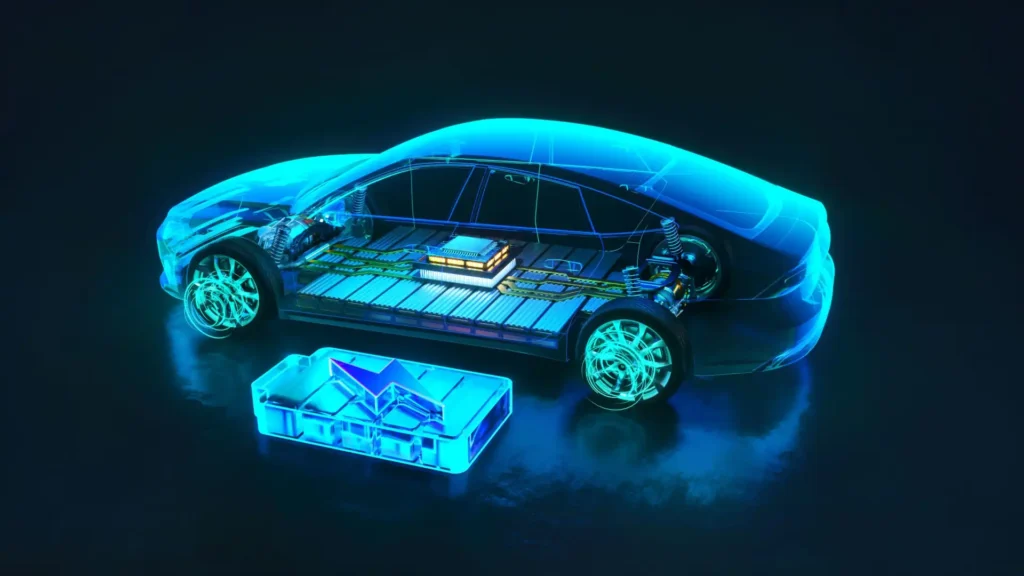
As a specialized magnesium source for lithium-ion cathodes, the core advantages of this product lie in its high purity, ultrafine particles, and low magnetism: it boasts a purity of over 99.5%, with impurities and heavy metal content strictly controlled to ppm levels; the particle size is uniform and controllable with excellent dispersibility; and its low magnetic susceptibility avoids interference with the battery’s electrochemical environment, perfectly meeting the requirements of high-end lithium-ion production. Its primary application focuses on the doping and structural regulation of cathode materials, solving performance bottlenecks at their root through precise lattice interaction.
During the cathode sintering process, magnesium carbonate undergoes stable pyrolysis within the 650–750°C range, generating high-reactivity nano-magnesium oxide. At this stage, Mg2+ ions are efficiently embedded into the cathode lattice, achieving gentle lattice substitution. On one hand, this inhibits the abnormal growth of grains during the high-temperature synthesis stage, resulting in more uniform crystal sizes and more regular grain boundaries, which enhances the overall consistency of the material. On the other hand, it regulates the crystal arrangement through ion site occupancy, reducing lattice defects and making the microstructure of the cathode material more stable.
This modification mechanism significantly optimizes Li+ transport channels, reduces the resistance to lithium-ion de-intercalation/intercalation, and substantially increases the ion diffusion rate. This is directly reflected in improved battery rate performance, faster charging and discharging speeds, and more stable high-current discharge, meeting the demands of scenarios such as fast charging and high-power discharge for new energy vehicles. Simultaneously, uniform grains and a regular lattice effectively reduce polarization loss, thereby increasing battery energy density and discharge capacity.
For cathode systems prone to structural decay, such as nickel-rich NCM and high-voltage LCO, the modification effect of magnesium carbonate is even more critical. During charging and discharging cycles, these materials are susceptible to phase transitions and volume expansion, which trigger micro-cracks and structural collapse, leading to capacity attenuation and shortened cycle life. Mg2+ doping creates a stable structural framework, inhibiting harmful phase transitions, buffering volume changes, and reducing particle cracking and active material shedding. This significantly extends the cycle life and enhances the stability of the battery under high-temperature and high-voltage conditions.
From an industrial application perspective, battery-grade high-purity ultrafine low-magnetic magnesium carbonate has become a standard additive for lithium-ion cathode production lines. It does not alter mainstream sintering processes, has controllable addition amounts, and offers high compatibility. It can both improve product yield and reduce the costs of downstream quality inspections. As the penetration rate of nickel-rich ternary and high-voltage single-crystal cathodes continues to rise, the demand for high-purity low-magnetic magnesium carbonate will grow steadily.
By empowering the lithium-ion industry through material innovation, battery-grade high-purity ultrafine low-magnetic magnesium carbonate has become an invisible cornerstone for battery performance upgrades through its three core values: lattice regulation, ion conduction optimization, and structural stabilization. In the future, as the new energy market’s demand for high-safety, long-life, and fast-charging batteries increases, this material will play a more vital role in the field of cathode modification, supporting the high-quality development of the global new energy industry.