
In our modern society, characterized by speeding high-speed trains and rapidly operating data centers, wires and cables serve as the “blood vessels and nerves” of energy and signal transmission. Consequently, their safety performance is of paramount importance. Within the core materials of cable jackets, magnesium hydroxide—a seemingly ordinary white powder—is becoming a key force in safeguarding cable safety through advanced modification technologies.
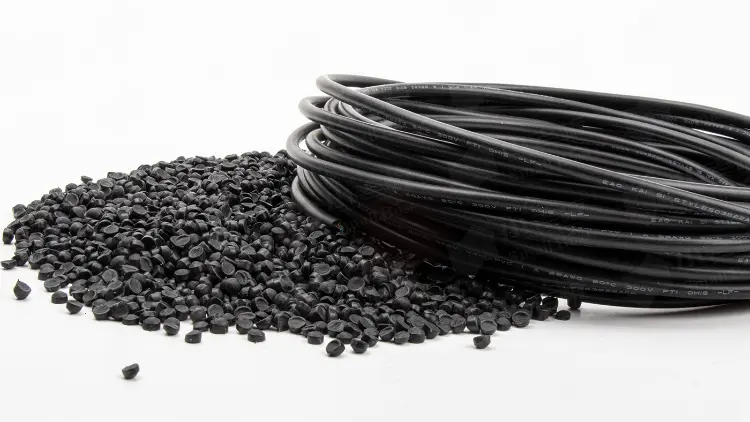
The reason magnesium hydroxide (Mg(OH)2) has become a core material for cable pellet modification lies in its unique flame-retardant mechanism. When a cable is exposed to high temperatures or fire, decomposes at temperatures above 340°C. This process not only absorbs a significant amount of heat to cool the combustion zone but also releases crystal water to dilute the concentration of combustible gases. Finally, the resulting magnesium oxide (MgO) forms a dense protective layer that isolates oxygen and prevents heat transfer. Unlike traditional halogen-based flame retardants, this process releases no toxic gases and can increase smoke light transmittance by up to three times, fundamentally preventing “secondary disasters” during a fire.
However, raw magnesium hydroxide has inherent shortcomings: its strong surface hydrophilicity makes it poorly compatible with hydrophobic cable base materials like polyethylene (PE). This often leads to agglomeration, resulting in uneven flame retardancy and reduced material flexibility. Therefore, modification technology has become the key to breaking through this bottleneck. By using modifiers such as branched polyethyleneimine to construct a three-dimensional network structure, the interfacial bonding between magnesium hydroxide and the base material can be significantly enhanced, ensuring uniform dispersion within the cable pellets. Furthermore, hexagonal plate-like magnesium hydroxide crystals offer additional advantages; their regular structure allows for tight packing, enabling the formation of an efficient barrier network at lower additive levels while simultaneously improving the tensile properties of the cable.
Modified magnesium hydroxide allows cable materials to achieve a dual leap in both safety and performance. By adding 30 to 70 parts of modified magnesium hydroxide to a formulation, cross-linked polyethylene (XLPE) jacketing materials can reach the UL94 V-0 flame retardancy standard while maintaining a tensile strength retention rate of over 80%. This ensures that flame retardancy requirements are met without sacrificing cable flexibility. These eco-friendly flame-retardant materials are already widely used in high-end fields, such as high-voltage cables for New Energy Vehicles (NEVs), signal cables for rail transit, and vertical cables for high-rise buildings, maintaining stable performance in high-temperature and high-voltage environments.
Of even greater significance is its “green” attribute. Modified magnesium hydroxide flame retardants are non-toxic and harmless. Furthermore, the magnesium hydroxide in waste cables can be recovered and repurposed for industrial flue gas treatment, achieving resource recycling. With continuous advancements in nanotechnology and surface modification processes, magnesium hydroxide is set to achieve even greater breakthroughs in improving flame retardancy efficiency and reducing additive dosages. This will provide a more solid guarantee for cable safety, ensuring that energy transmission is both efficient and secure.