
Messi Biology states that in the field of inorganic chemistry, the connection between Magnesium Oxide (MgO) and Magnesium Iodide (MgI₂) extends far beyond a simple combination of elements. Due to its unique chemical properties, the former has become a core material in the preparation, purification, and performance optimization of the latter. This seemingly ordinary oxide, through precise chemical reaction mechanisms, supports the application of magnesium iodide across multiple industrial sectors.
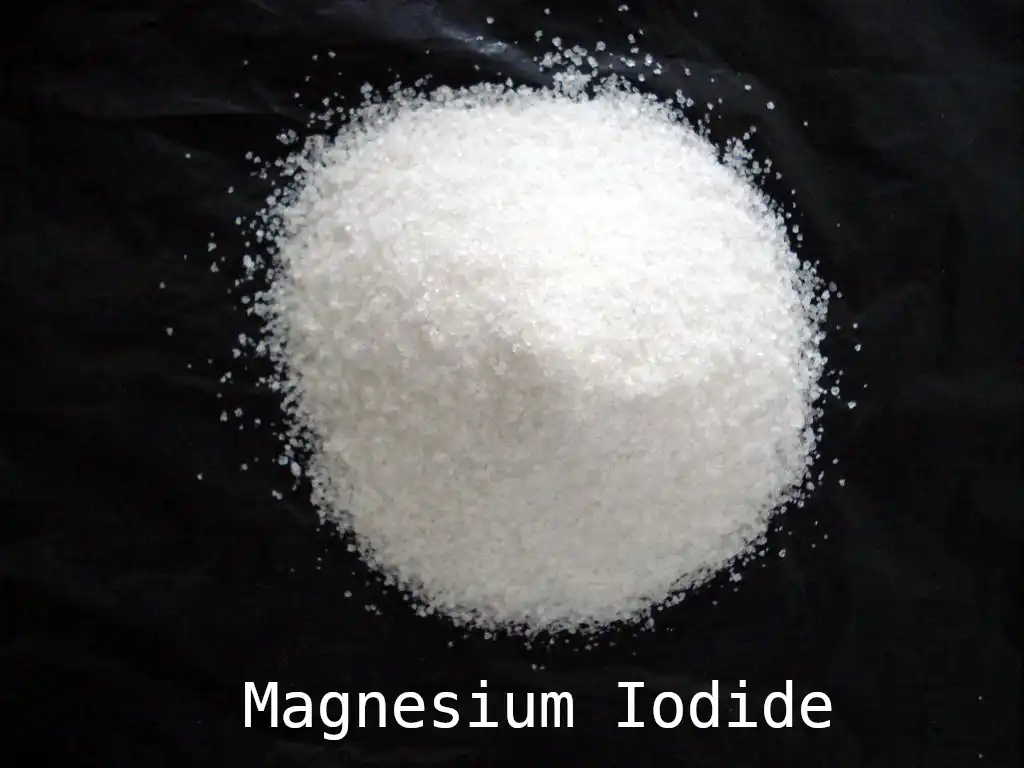
Magnesium iodide is an important inorganic halide compound. It appears as white, deliquescent crystals and possesses excellent electrical conductivity and reactivity, making it widely used in organic synthesis, pharmaceutical manufacturing, and the electronics industry. However, its chemical nature is highly active; it easily absorbs moisture and decomposes in the air, releasing elemental iodine which causes the material to turn brown. This presents significant challenges for its preparation and storage. The intervention of magnesium oxide provides an efficient solution, starting with the synthesis process.
One of the core industrial methods for preparing magnesium iodide is the neutralization reaction between magnesium oxide and hydriodic acid (HI): MgO + 2HI → MgI₂ + H₂O. Compared to the “dry method” involving a direct reaction between magnesium powder and elemental iodine, this “wet process” offers distinct advantages: magnesium oxide is chemically stable at room temperature, and its reaction with hydriodic acid is mild and controllable, producing no violent exotherms or toxic gases. The only by-products are magnesium iodide and water, making the purity of the end product easy to control. Through evaporative crystallization and vacuum drying, industrial-grade magnesium iodide with a purity of ≥98% can be obtained. Electronic-grade purity can even reach over 99.99%, meeting the demands of precision manufacturing.
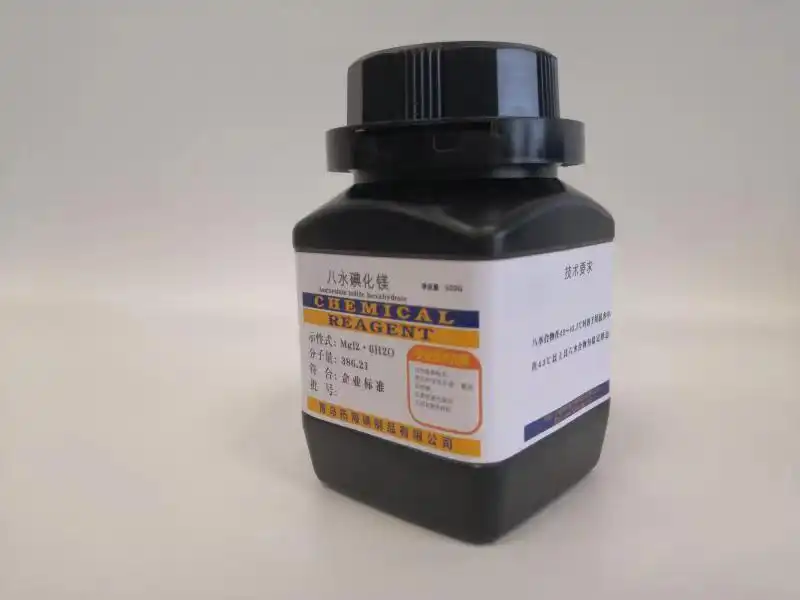
Beyond serving as a raw material for synthesis, magnesium oxide indirectly ensures the storage stability of magnesium iodide. When magnesium iodide is heated in the air, it decomposes completely into magnesium oxide. This reverse reaction suggests that introducing an appropriate amount of magnesium oxide into the storage environment can suppress the decomposition process of magnesium iodide through chemical equilibrium. Furthermore, the alkaline nature of magnesium oxide allows it to absorb trace moisture and acidic impurities from the environment, creating dry and clean storage conditions and preventing the magnesium iodide from forming hydrates or failing due to decomposition.
In extended application fields, the synergistic effect between magnesium oxide and magnesium iodide is even more vital. In new energy storage technologies such as magnesium batteries, magnesium iodide is often used as an electrolyte component. The addition of magnesium oxide can regulate the pH value and ionic conductivity of the electrolyte while utilizing its chemical stability to prevent electrolyte deterioration, thereby extending battery life. In organic synthesis, high-purity magnesium iodide prepared via magnesium oxide can participate more precisely in processes such as Grignard reactions and halogenated hydrocarbon coupling, providing a reliable reagent for drug synthesis and material preparation.
From laboratory reactions to industrial production, magnesium oxide—acting in the dual roles of “raw material” and “stabilizing additive”—has solved the core difficulties in the production of magnesium iodide. This precision application based on chemical characteristics not only reduces production costs and improves product quality but also promotes the widespread use of magnesium iodide in high-end manufacturing, highlighting the significant value of inorganic oxides in modern industry.