
On the grand stage of modern chemical industry, while we marvel at the creation of various fine chemicals, eco-friendly fuels, and polymer materials, the spotlight is often on the “protagonists”—the catalysts that trigger intense chemical reactions. Among these, hydrogenation catalysts hold a pivotal position in petroleum refining and fine chemical production due to their ability to convert unsaturated carbon-hydrogen bonds into saturated ones. However, few realize that in this microscopic reaction process, a white powder is quietly playing an indispensable role as the “unsung hero”: magnesium carbonate.
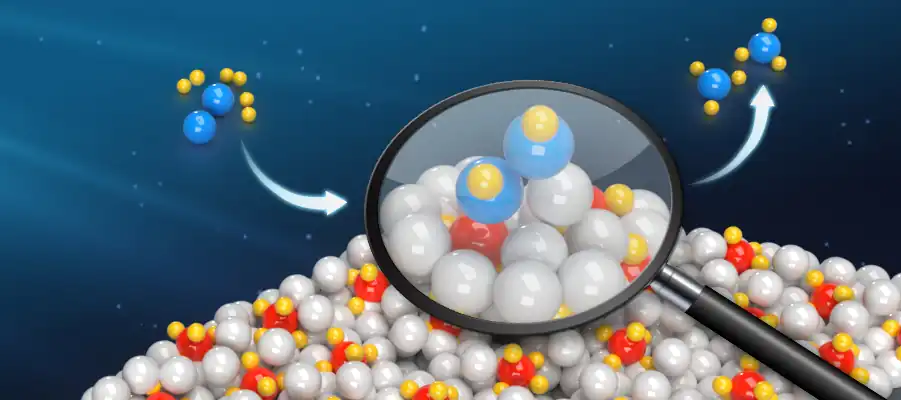
When magnesium carbonate is mentioned, many people might think of rubber reinforcing agents, antacids, or even flour additives. In reality, within the field of high-end catalytic materials, magnesium carbonate has become a critical carrier for hydrogenation catalysts thanks to its unique physical and chemical properties. If a hydrogenation catalyst were compared to a racing car, the active metal components (such as nickel, palladium, or platinum) would be the “engine” providing power, while magnesium carbonate acts as the “chassis” that supports the engine and ensures its stable operation.
First, magnesium carbonate provides excellent structural support. In hydrogenation reactions, it is essential to disperse the active metals as much as possible to increase their contact area with the reactants. Bulk metals have limited surface area, resulting in very low catalytic efficiency. The porous, high-surface-area structure of magnesium carbonate acts like a massive sponge, capable of uniformly “anchoring” tiny active metal nanoparticles onto its surface. This high degree of dispersion not only significantly improves the utilization rate of metal atoms but also effectively reduces the production costs of the catalyst.
Second, magnesium carbonate significantly enhances catalyst stability. Under high-temperature and high-pressure hydrogenation environments, tiny metal particles tend to aggregate—a phenomenon known as “sintering”—which leads to rapid catalyst deactivation. As a carrier, magnesium carbonate utilizes the acidic or basic sites on its surface to interact with the metals. These sites act like sturdy “anchors,” holding the metal particles in place and preventing them from migrating and clustering, thereby greatly extending the lifespan of the catalyst.
Furthermore, magnesium carbonate plays a vital role in regulating reaction selectivity. Hydrogenation reactions are often accompanied by complex side reactions; the challenge in catalyst design is precisely reducing only the target functional groups. As a weakly basic carrier, magnesium carbonate can adjust the adsorption mode and electronic state of the reactants through its surface basic sites. Much like a “sieve,” it precisely guides the reaction toward the desired target product, minimizing the formation of by-products.
Magnesium carbonate shoulders multiple responsibilities in hydrogenation catalysts, including dispersing active components, preventing metal sintering, and regulating product selectivity. It serves as a bridge between microscopic metal atoms and macroscopic industrial production. As China’s catalyst technology continues to advance, the requirements for carrier material performance are becoming increasingly rigorous. In the future, high-performance magnesium carbonate, achieved through modification and sophisticated preparation, will undoubtedly play an even greater role in emerging fields such as new energy and environmental chemical engineering, continuing to write its brilliant chapter as an “unsung hero.”