
Messi Biology states that magnesium is an essential “element of life” for the human body, participating in hundreds of physiological reactions. As a magnesium source with high bioavailability, magnesium citrate is widely used in medicine, food, and other fields. Behind its success, magnesium hydroxide plays an indispensable and critical role—it is not only the core raw material for preparing magnesium citrate but also determines the purity and safety of the final product.
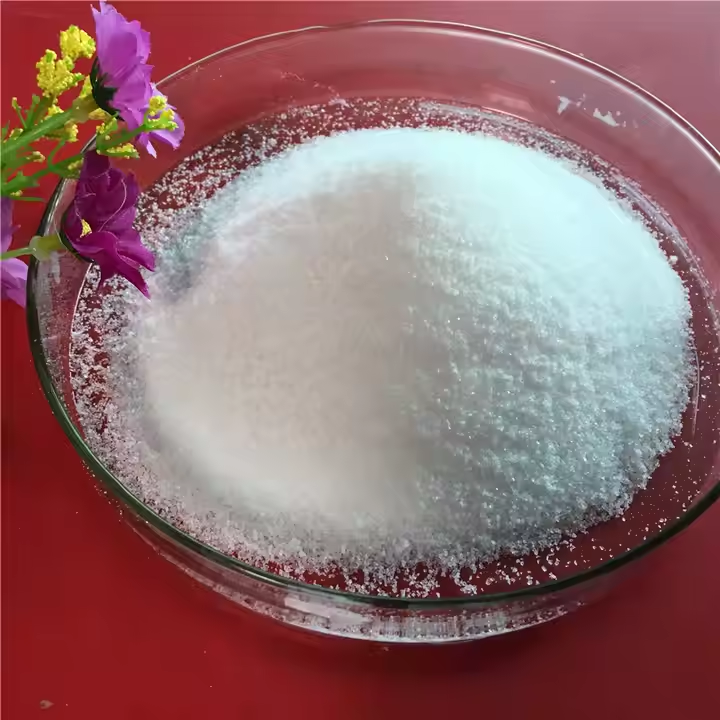
Magnesium hydroxide is a weakly alkaline compound whose unique chemical properties make it an ideal raw material for magnesium citrate production. In industrial manufacturing, it undergoes a precise neutralization reaction with food-grade citric acid: magnesium hydroxide is gradually added to a citric acid solution at 70°C, with the pH value controlled between 5 and 8, ultimately yielding magnesium citrate and water. This reaction offers two major advantages: first, the process is mild and does not produce harmful gases like carbon dioxide, preventing bubbles or impurities in the product; second, the byproduct is pure, consisting only of the target substance and water, which simplifies the subsequent purification process. Compared to raw materials like magnesium oxide or magnesium carbonate, magnesium hydroxide offers superior reaction controllability. Its weight ratio with citric acid is fixed at 0.41:1, allowing for precise control of the magnesium ion release rate to ensure a complete reaction. More importantly, high-quality magnesium hydroxide raw materials can keep the lead content below 0.00001%, far exceeding the USP30 (U.S. Pharmacopeia) standards, thus providing a safety guarantee for pharmaceutical-grade magnesium citrate.
Magnesium citrate prepared from magnesium hydroxide is highly valued in various fields due to its high solubility and biocompatibility. As a magnesium supplement, magnesium citrate has a magnesium content of approximately 11%, and its human absorption rate far exceeds that of inorganic magnesium salts, helping to relieve muscle cramps and improve sleep. Simultaneously, it serves as a gentle laxative often used for bowel preparation before colonoscopies, with significantly fewer side effects than stimulant laxatives. The safety of these applications stems from the low heavy metal characteristics of the magnesium hydroxide raw material. In beverages and baked goods, magnesium citrate acts as a nutritional fortifier and stabilizer; adding just 0.1% to 5% can enhance nutritional value and improve texture. The high purity of magnesium hydroxide ensures the safety of these food additives. Furthermore, magnesium citrate can serve as a precipitant for separating metal ions or as a template for electrode materials; its porous structure and optimized performance benefit from the precise control of crystal morphology during the magnesium hydroxide preparation process.
Why has magnesium hydroxide become the preferred raw material? The key lies in its unique advantages: first, high safety, as pharmaceutical-grade magnesium hydroxide has extremely low heavy metal content that meets pharmacopoeia standards; second, a mild reaction that avoids the corrosion of equipment caused by strongly alkaline materials; and third, wide availability with controllable costs, making it suitable for large-scale production. In production, it not only provides magnesium ions but also neutralizes the strong acidity of citric acid, ensuring product stability. From laboratory reactions to industrial production lines, magnesium hydroxide, with its unique chemical characteristics, safeguards the high-quality production of magnesium citrate. This precise “raw material-to-product” matching not only reflects the sophistication of chemical engineering but also allows the health value of magnesium to enter daily life more safely.