
Messi Biology states that magnesium hydroxide is a vital inorganic flame retardant widely utilized in various polymer materials, including polyurethane. It functions through mechanisms such as endothermic decomposition and the release of water. Due to its eco-friendly, halogen-free, and smoke-suppressing characteristics, it has become a primary alternative to traditional halogen-based flame retardants. However, its application in polyurethane also faces challenges, such as the requirement for high loading levels and its significant impact on the mechanical properties of the material.
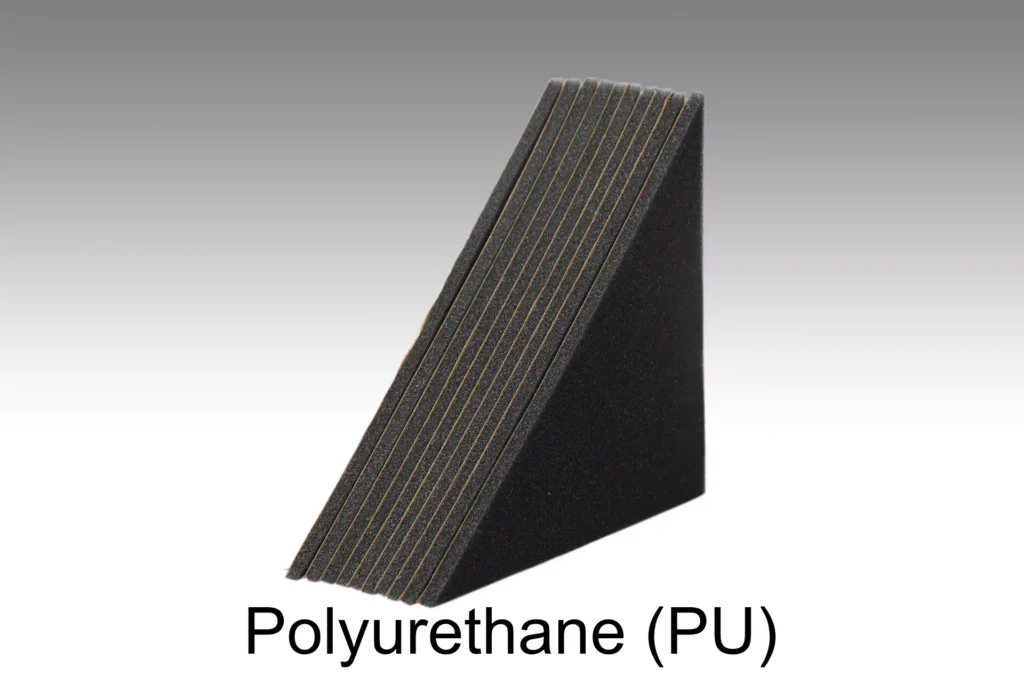
1. Flame Retardant Mechanism of Magnesium Hydroxide
The flame retardant effect of magnesium hydroxide is a typical “chemical-physical” multi-effect synergistic process, achieved through the following mechanisms:
- Endothermic Cooling:
Magnesium hydroxide has specific thermal stability and decomposes when heated (starting at approximately 340°C):
Mg(OH)₂→MgO+H₂O-Q
This is a strongly endothermic reaction (absorbing approximately 1.4 kJ/g of heat). it absorbs a massive amount of heat from the combustion zone, significantly lowering the surface temperature of the material, slowing down or even interrupting the thermal decomposition of the polymer, thereby inhibiting combustion at the energy source. - Dilution Effect:
The water vapor (H2O ) produced during decomposition dilutes the concentration of oxygen and combustible gases (such as hydrocarbons) at the material surface, forming a “gas curtain” that makes sustained combustion difficult. Meanwhile, the generated inert solid magnesium oxide (MgO) also dilutes the proportion of combustible material. - Formation of a Protective Layer:
The magnesium oxide (MgO) generated after decomposition is a high-temperature resistant inert substance. It works with the carbon produced during combustion to form a dense and sturdy protective char layer on the material surface. This char layer effectively insulates the interior from heat and oxygen and prevents internal combustible gases from escaping, providing an excellent barrier effect. - Smoke Suppression:
The decomposition of magnesium hydroxide does not produce toxic or flammable gases. The MgO protective layer can adsorb soot particles, significantly reducing the amount of smoke generated during polymer combustion, which is crucial for increasing escape opportunities during a fire.
2. Application and Challenges of Magnesium Hydroxide in Polyurethane
Polyurethane materials come in many forms, including flexible foams (e.g., sofa cushions), rigid foams (e.g., insulation boards), elastomers, and coatings. Magnesium hydroxide is mainly applied in rigid PU foams, PU elastomers, and coatings where transparency is not required but high flame retardancy standards are.
Advantages:
- Eco-friendly and Non-toxic: Halogen-free; does not produce dioxins or corrosive/toxic gases like hydrogen halides during combustion.
- High Smoke Suppression: Significantly reduces smoke density, enhancing safety.
- High Flame Retardancy: Shows significant synergistic effects when compounded with other flame retardants (such as red phosphorus, expanded graphite, or silicon-based retardants).
- Good Thermal Stability: Its higher decomposition temperature (340°C) makes it suitable for PU systems with higher processing temperatures (such as certain elastomers and engineering plastics).
Challenges and Limitations:
- High Loading Requirements: To achieve ideal flame retardancy (such as UL-94 V-0), loading levels of 50% to 60% are usually required. This severely impacts the mechanical properties of PU—especially elastomers—leading to a sharp decline in tensile strength and elongation at break.
- Poor Compatibility: Inorganic magnesium hydroxide has poor compatibility with the organic PU matrix and tends to agglomerate, causing stress concentration and further deteriorating mechanical performance.
- Impact on Processing: High loading levels sharply increase the viscosity of the material, creating difficulties in mixing, casting, foaming, and other processing steps.
3. Solutions and Modification Technologies
To overcome these challenges and improve the effectiveness of magnesium hydroxide in PU, the industry primarily employs the following methods:
- Surface Modification:
This is the most critical technology. Surface-active agents such as silane coupling agents, titanate coupling agents, or stearic acid are used to coat the magnesium hydroxide powder.- Effect: Improves the interfacial compatibility between Mg(OH)₂ and the PU matrix, enhances dispersibility, and reduces agglomeration, thereby maintaining mechanical properties and flame retardant efficiency at the same loading level.
- Ultra-finization and Nano-sizing:
Grinding magnesium hydroxide particles to micron or even nano-scale levels.- Effect: Smaller particle sizes provide a larger specific surface area and more contact points with the polymer. This allows for faster and more efficient action during combustion, meaning a lower loading level can achieve the same flame retardancy grade with less negative impact on mechanical properties.
- Synergistic Compounding:
Compounding magnesium hydroxide with other flame retardants is an effective way to reduce costs and increase efficiency.- Common Partners: Red phosphorus, expanded graphite (EG), ammonium polyphosphate (APP), aluminum hydroxide (ATH), etc.
- Effect: For example, when Mg(OH)₂ is compounded with APP for PU, it promotes the formation of a denser char layer, creating a “1+1>2” synergistic effect and significantly reducing the amount of Mg(OH)₂ required.
Advantages of “Messi Biology” Magnesium Hydroxide Flame Retardants
In the field of polyurethane applications, a top-tier magnesium hydroxide supplier should provide solutions to the aforementioned challenges. Relying on its technical expertise, Messi Biology offers products with the following features:
- High Purity and Low Impurities: High purity with extremely low heavy metal content ensures the stability and safety of PU products during processing and use.
- Precise Particle Size Control and Nano-scale Lines: Offers micron and nano-scale powders with precise particle size distribution. Ultra-fine particles mean higher efficiency, helping customers reduce loading levels and minimize the impact on PU mechanical properties.
- Professional Surface Modification: Provides high-dispersibility products pre-treated with silane or titanate coupling agents. These modifications greatly improve compatibility with the PU matrix, ensuring uniform dispersion and better retention of mechanical strength, toughness, and processing rheology.
- Technical Support and Customized Solutions: Messi Biology provides personalized product recommendations, compounding suggestions, and application guidance based on specific PU systems (rigid foam, elastomer, coating) and flame retardancy requirements to help customers achieve the best cost-performance ratio.
Summary
Magnesium hydroxide is an eco-friendly, high-efficiency inorganic flame retardant with outstanding smoke suppression, making it highly suitable for PU rigid foams and elastomers that require high safety and environmental standards. While high loading levels present a bottleneck for mechanical performance, these issues can be effectively mitigated through surface modification, ultra-finization, and synergistic compounding. Choosing a professional supplier like Messi Biology, which provides high-purity, ultra-fine, and surface-modified products along with technical support, is crucial for the successful development of high-performance flame-retardant polyurethane materials.