
The widespread application of 5G technology has brought immense convenience to fields such as national defense, healthcare, and communications. However, it has also led to a diversification of communication devices and an increase in frequency bands, making the electromagnetic environment increasingly complex and threatening the normal operation of electronic equipment. Furthermore, in the military sector, combat platforms and weaponry—such as modern aircraft, naval vessels, and missiles—need to reduce their detectable signals to achieve stealth. Consequently, ceramic-matrix wave-absorbing materials, which have broad application prospects in electromagnetic pollution control and radar stealth technology, have become a research focus worldwide.
1. Principles of Wave-Absorbing Materials
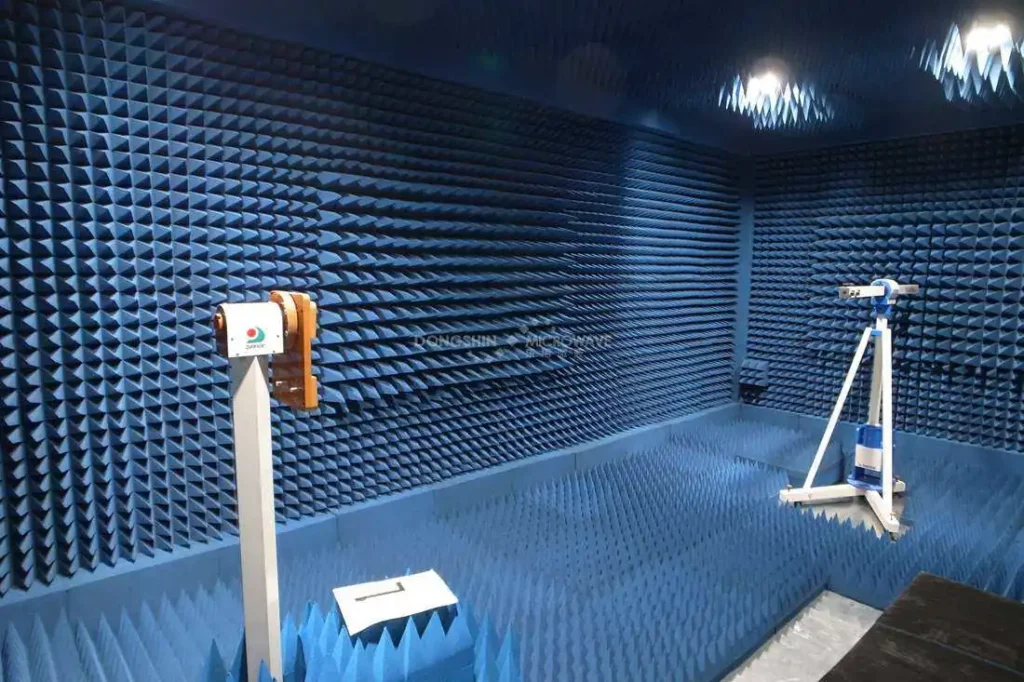
General metallic materials produce reflections when receiving electromagnetic waves, which can interfere with other equipment or communication systems. In contrast, wave-absorbing materials (also known as Radar Absorbing Materials or RAM) absorb or significantly weaken the energy of electromagnetic waves emitted by other electronic devices through dielectric loss, magnetic loss, and impedance loss. These waves are reflected, scattered, or transmitted within the material’s structure, causing the energy to attenuate and convert into heat or other forms of energy, thereby reducing electromagnetic interference.
Therefore, wave-absorbing materials must satisfy two requirements:
- Reduction of surface reflection: This is achieved through “impedance matching.” When the impedance of the absorber equals the impedance of air, the reflection ratio at the material surface is minimized, allowing maximum entry of waves into the interior. This depends on the relative permittivity and relative magnetic permeability.
- Maximum attenuation: This relies on “lossy” agents. These include dielectric loss absorbers with high conductivity or permittivity (such as carbides like
SiCSiCSiCandTi3SiC2Ti_3SiC_2Ti3SiC2) and magnetic loss absorbers with high permeability and low permittivity (such as metals and ferrites).
2. Advantages and Types of Ceramic-Matrix Wave-Absorbing Materials
Wave-absorbing materials are categorized into two types based on their molding process and load-bearing capacity: Coating-type and Structural-type.
- Traditional coating-type materials are applied directly to the target surface (e.g., metal micropowders, ferrite powders, conductive polymers). They face limitations due to poor thermal stability, poor mechanical properties, increased weight, and susceptibility to peeling from the substrate.
- Structural-type materials integrate the absorbing agent with the matrix, reducing weight while ensuring more reliable performance.
Ceramic-matrix wave-absorbing materials use ceramic as the matrix with added absorbing agents. Although most ceramics are low-permittivity, low-loss, non-magnetic substances with limited intrinsic attenuation, they possess excellent thermal stability, chemical stability, high mechanical strength, and wave transparency. They are ideal as composite matrices or impedance matching layers. This allows the materials to maintain reliable absorption in extreme environments (high temperature/pressure) while providing strong load-bearing capabilities.
Currently, the types of ceramics used for these matrices primarily include carbides, nitrides, and oxides.
1. Carbide Ceramic-Matrix Wave-Absorbing Materials
Carbide ceramics are high-temperature resistant and ultra-hard materials with melting points often reaching 3000°C, making them suitable for harsh aerospace and military environments. Among them, Silicon Carbide (SiC) is notable for its low coefficient of thermal expansion and low density, allowing it to maintain structural stability under large temperature fluctuations.
When doped or modified with elements like iron, cobalt, or nickel, SiC gains high conductivity and permittivity for electromagnetic attenuation. Since the type of dopant and the degree of oxidation significantly affect both mechanical and absorbing properties, the dielectric constant and loss capacity can be effectively regulated through heat treatment, modification, and structural design.
Typically, SiC ceramic-matrix absorbers are synthesized via the Polymer Derived Ceramics (PDC) method. Organic polymer precursors containing silicon (such as polycarbosilane) are impregnated into carbon fiber preforms, cured, and then pyrolyzed at high temperatures under inert gas. While high carbon content improves bending strength, excessive carbon or large grains can increase surface reflection. Researchers have found that adding fillers like SiO2 or metals to the impregnation solution can effectively balance mechanical strength and wave-absorbing performance.

2. Nitride Ceramic-Matrix Wave-Absorbing Materials
Nitride ceramics offer high decomposition temperatures and excellent chemical and mechanical stability. Silicon Nitride (Si3N4) and Aluminum Nitride ( AlN ) are particularly promising.
- Si3N4 has high fracture toughness and low thermal conductivity, making it resistant to thermal shock. In wave absorption, it is often combined with SiC to create “insulating-absorbing” materials. Processes like foam gel-casting are used to build hierarchical porous structures, reducing surface reflection and optimizing the balance between impedance matching and absorption.
- AlN possesses excellent thermal conductivity in addition to standard nitride strengths. This makes AlN -based composites ideal for managing heat in high-power electronic devices while providing wave absorption. Since AlN itself has low dielectric loss, it is frequently compounded with SiC to create AlN – SiC composites where AlN provides heat dissipation and SiC provides electromagnetic attenuation.
3. Oxide Ceramic-Matrix Wave-Absorbing Materials
Composite materials based on oxide ceramics such as Alumina (Al2O3), Zinc Oxide (ZnO), Magnesium Oxide (MgO), and Silica (SiO2) have been widely reported.
- Alumina ( Al2O3 ) is the most researched due to its low density, high hardness, corrosion resistance, and low cost. Beyond its use as a refractory or substrate, its excellent wave transparency makes it useful for radar stealth.
Because Al2O3 has limited intrinsic loss, it is often used as a porous, mesh, or fibrous matrix combined with high-loss materials like Ti3SiC2 or FeSiAl. Porous structures not only reduce weight and regulate electromagnetic parameters but also trigger multiple reflections and scattering of incident waves, increasing the propagation path and enhancing absorption. However, the primary drawback of alumina-based materials is their high brittleness and low toughness, which complicates post-processing.
Summary
The general trend for wave-absorbing materials is toward high absorption, wide bandwidth, thinness, lightweight, and high-temperature resistance. Compared to traditional coatings, ceramic-matrix materials offer reduced weight and higher reliability.
- Carbides are widely used for their strong loss capacity and high-temperature stability, with carbon fibers helping to mitigate ceramic brittleness.
- Nitrides offer better toughness, with Aluminum Nitride showing great potential for thermal management.
- Oxides benefit from good wave transparency and low cost, though brittleness remains a key constraint.
Future research will continue to focus on resolving the imbalance between mechanical properties and wave-absorbing performance in these composite ceramics.