
Messi Biology notes that when you are streaming videos on a 5G phone or operating a new energy vehicle (NEV), you might not realize that the stable operation of these devices depends on a critical composite material: Aluminum Nitride (AlN) ceramics enhanced with Magnesium Oxide (MgO). As an “unsung hero” in the fields of electronic information and high-end manufacturing, magnesium oxide plays a unique role in empowering AlN ceramics with superior performance.
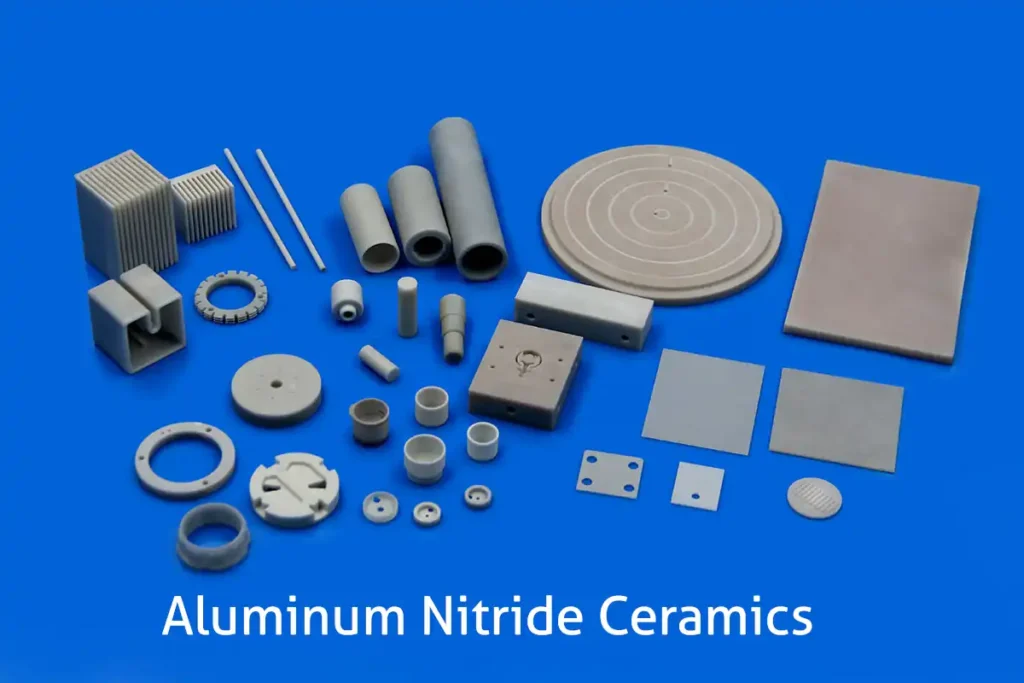
Aluminum nitride ceramics are already “star performers” in the material world. They possess a theoretical thermal conductivity as high as 320 W/(m·K)—several times that of alumina ceramics—and a coefficient of thermal expansion close to that of silicon. With excellent insulation properties, they are the ideal choice for heat dissipation packaging in electronic devices. However, AlN has “natural shortcomings”: pure AlN ceramics require sintering temperatures exceeding 1800°C, which involves high energy consumption and difficulty in forming a dense structure. Excessive porosity severely hinders heat transfer, and its mechanical strength also requires improvement. The addition of magnesium oxide serves as the “perfect touch” to solve these challenges.
As an efficient sintering aid, the primary role of magnesium oxide is to lower the sintering threshold of AlN ceramics. During the high-temperature sintering process, MgO reacts with trace oxide films on the surface of the AlN to form a low-melting-point liquid phase. This acts like a “glue” that allows ceramic particles to bond rapidly, reducing the sintering temperature by more than 200°C while significantly reducing internal pores. This process not only saves energy but also greatly increases the density of the ceramic. The higher the density, the fewer “obstacles” there are to heat transfer; consequently, the thermal conductivity of the final product can be increased by more than 2%, perfectly meeting the high heat dissipation requirements of electronic devices.
More importantly, magnesium oxide reacts with aluminum nitride to form a composite phase structure with superior properties. During the reaction, magnesium-aluminum spinel (MgAl2O4) or MgAlON (Magnesium Aluminum Oxynitride) phases are generated. These new phases act like a “steel skeleton” within the ceramic, increasing the material’s flexural strength by 5% and its high-temperature resistance by 210°C, all while maintaining excellent electrical insulation. This combination of “strength and toughness” allows AlN ceramics to withstand both the high-temperature operating environments of electronic equipment and the mechanical impacts encountered during assembly and use.
Today, these modified ceramics are widely used in several high-end sectors:
- In 5G base stations: Used as filter substrates, they reduce signal loss by 30%.
- In power electronics: Serving as heat dissipation substrates for IGBT modules, they achieve thermal resistance as low as 0.1°C/W.
- In the metallurgical industry: AlN ceramic crucibles with added MgO can withstand the erosion of molten metals, extending their service life by 3 to 5 times.
As electronic devices move toward higher integration and higher power, the demand for this composite material continues to climb. It is estimated that the relevant market scale will reach 5 billion RMB by 2025. From formula optimization in the laboratory to mass industrial application, magnesium oxide uses its “small lever to move big weights” to precisely bridge the performance gaps of aluminum nitride ceramics. This innovation in material combination not only drives the upgrade of ceramic materials but also serves as a cornerstone for the high-quality development of emerging industries like 5G communication and new energy, continuously injecting “hardcore” power into high-end manufacturing.