
Whether your grip strength is sufficient is an important factor that is often overlooked in the fitness process. It plays a significant role in your training performance, quality, and safety. Besides improving grip through specific exercises, there are two main ways to prevent grip strength from becoming a limiting factor: using lifting straps or using lifting chalk (magnesium powder).
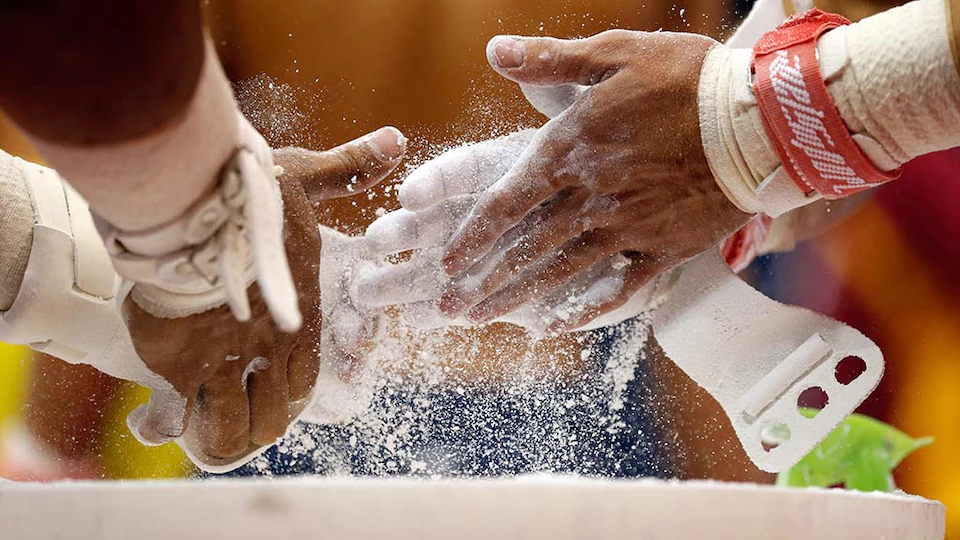
While chalk does not provide as much assistance as lifting straps, it is permitted in the vast majority of strength sports, whereas straps often are not. Additionally, beyond increasing friction, chalk helps dry the skin and reduces the impact of sweat on training, giving it a unique advantage. This is why I believe every trainee should be equipped with it. Today, with our usual rigorous approach, we will thoroughly analyze lifting chalk: why you need it and how to choose and use it!
What is Lifting Chalk?
Lifting chalk is essentially magnesium carbonate (chemical formula MgCO3). Its core properties—chemical stability, non-toxicity, and odorlessness, combined with its ability to absorb water and oil—are why it is used by gymnasts, weightlifters, rock climbers, and strength trainees to keep their hands dry and increase the coefficient of friction.
Regarding specific products, the quality of magnesium carbonate varies. High-quality chalk not only has a better drying effect but also lasts longer on the skin. Furthermore, different manufacturers may add other ingredients, such as desiccants. Therefore, the effectiveness of chalk can vary between products. Additionally, not all “magnesium powder” is actually in powder form.
Classification of Lifting Chalk
Depending on the form and application, there are four main types:
- Chalk Blocks: These are solid blocks of magnesium carbonate.
- Loose Chalk: This is essentially the same as a block, but pre-crushed into small pieces or powder. Blocks are more portable and less likely to spill, while loose chalk is ready for immediate application. I have used both in my training; the performance is identical, so it comes down to personal preference.
- Chalk Socks (Chalk Balls): As the name suggests, this is a sock-like mesh bag filled with loose chalk. The powder is released through the fabric when you handle it. Its advantage is that it is more convenient, economical, and significantly cleaner than blocks or loose powder.
- Liquid Chalk: This is magnesium carbonate mixed with alcohol. You apply it like a lotion. The alcohol evaporates quickly, which further dries the skin and allows the magnesium carbonate to adhere better to the surface. This not only increases friction but also allows the chalk to last much longer during a session.
How to Use Chalk Effectively in Training
The application is simple, and the benefits are clear. Generally, we use it for deadlifts, Olympic lifting, and back training. However, its application is more versatile than people realize.
Application Sites:
Beyond the hands, applying chalk to other areas can assist your training:
- Bench Press: Applying chalk to your upper back or the bench itself can help “pin” your torso in place, enhancing upper back stability.
- Squats: Applying chalk to the area around your traps (depending on your bar position) helps secure the barbell, “locking” your body and the bar together. This improves performance and safety.
You will find that chalk is useful not just for “pulling” movements like deadlifts, pull-ups, rows, and shrugs, but also for squats, overhead presses, and any challenging movement where you need to keep your hands dry and increase the friction between your body and the weight. Personally, even when I am not sweating, I find that using chalk for pressing movements helps me grip the bar better, maintain stability, and reduce wrist pressure caused by bar instability.
A Few Notes:
- Don’t Over-rely: It is not necessary to use it for every single set. Use it when it counts.
- Don’t Over-apply: Applying a layer that is too thick can actually have the opposite effect, reducing friction and dampening your “feel” for the barbell.
- Stay Focused: You don’t need to put it on your shoes for grip or cover your whole body just to look cool.
Why Do Some Gyms Ban Chalk?
In my earlier years of training, I visited many gyms, and it was rare to find one that allowed “open” chalk use without resistance, let alone provided it. Back then, I thought gyms that banned chalk were “unprofessional.” However, after managing a facility, I realized there are valid reasons for these bans. Besides the fact that traditional chalk is very difficult to clean, there is the issue of air quality.
Gyms are often relatively enclosed spaces. While the amount may be small, having magnesium carbonate dust floating everywhere and being inhaled is not ideal—especially if the product contains added desiccants or unknown impurities in low-quality brands. Therefore, bans are often reasonable.
However, these issues can be greatly mitigated by using chalk balls or liquid chalk. I believe more gyms will start proactively purchasing liquid chalk for their members because it is much more hygienic and solves the mess and dust problems associated with traditional powder.
One study on air quality in indoor climbing gyms found that liquid chalk actually reduced the concentration of dust particles in the air compared to blocks or socks. While the exact mechanics might be complex, it supports the superiority of liquid chalk in commercial environments.
Bonus Knowledge: Talcum Powder
In powerlifting or weightlifting competitions, you might see athletes using another type of powder. This is talcum powder (magnesium silicate). Unlike lifting chalk, talcum powder reduces friction. During heavy deadlifts, athletes may apply talcum powder to their thighs or the center of the barbell to reduce friction when the bar slides against the legs during the lift.